
Most creators treat posting like it's harmless by default. Upload, caption, post, repeat. But that casual approach quietly builds a trail of metadata, exposed settings, and digital fingerprints that platforms, bad actors, and competitors can use against you. Over 70% of social media accounts that face penalties in 2026 are linked to avoidable privacy oversights, not intentional violations. This guide breaks down exactly how privacy works across major platforms, what happens when you ignore it, and the practical moves you can make right now to protect your content, your audience, and your brand reputation.
Table of Contents
- Why privacy matters for social media creators
- Privacy settings and features on top social platforms
- Consequences of ignoring social media privacy
- Practical steps for safeguarding your content and audience
- Why smart privacy transforms your social impact
- Enhance your privacy with the right tools
- Frequently asked questions
Key Takeaways
| Point | Details |
|---|---|
| Privacy is essential | Robust privacy practices protect your content, audience, and reputation. |
| Platform settings vary | Each social media platform has unique privacy controls creators must review. |
| Lapses carry real risks | Ignoring privacy can lead to penalties, bans, and legal trouble. |
| Proactive steps matter | Simple actions like anonymizing images and auditing settings make a big difference. |
| Privacy builds trust | Transparently prioritizing privacy helps grow a loyal, engaged audience. |
Why privacy matters for social media creators
Privacy on social media is not about hiding. For creators, influencers, and brand managers, it is about controlling who sees what, when, and in what context. A single privacy misstep can expose your location, your device data, or your unpublished content to people who have no business seeing it.
The risks are not hypothetical. Creators have had original content scraped and reposted before their scheduled launch dates. Others have experienced doxxing after geotagged images revealed home addresses. Some lost brand deals because a collaborator accessed their account through a compromised third-party tool. As privacy's impact on your life confirms, robust data privacy is necessary for media outlets and content creators to protect against unintended data leaks and legal issues.
"Your content is only as safe as the weakest privacy setting on your account."
Trust is also at stake. Audiences and brand partners want to work with creators who handle data responsibly. If your account is breached or your audience's personal information is exposed through a post you shared, that trust collapses fast. Rebuilding it takes months, sometimes years.
Here are the most common privacy threats targeting creators right now:
- Doxxing: Malicious actors compiling and publishing personal information from public posts
- Phishing attacks: Fake brand deal emails or platform notifications designed to steal your login credentials
- Data scraping: Automated tools pulling your content, follower data, and engagement metrics without permission
- Metadata exposure: Hidden data embedded in images that reveals your location, device type, and shoot time
- Third-party app breaches: Connected tools accessing your accounts after their own security is compromised
For a broader look at protecting your accounts, our social media security guide walks through the key defensive moves every creator should know.
Privacy settings and features on top social platforms
Every major platform offers some level of privacy control. The problem is that platform security features are often set to favor publicity over privacy by default, meaning you need to actively go in and adjust them.
Here is a side-by-side look at what each major platform offers and where the risks hide:
| Platform | Key privacy tools | Default setting | Unique risk |
|---|---|---|---|
| Account privacy, story sharing limits, close friends, tag controls | Public | Metadata in uploaded images, third-party app access | |
| TikTok | Private account, duet/stitch controls, comment filters, data download | Public | Aggressive data collection, device fingerprinting |
| Audience selector, off-Facebook activity, profile locks | Friends | Legacy app permissions from old integrations | |
| X (Twitter) | Protected posts, location off toggle, muted words | Public | API data scraping, real-time location in tweets |
Beyond these visible settings, metadata is the hidden threat most creators overlook. Every image you shoot contains embedded data including GPS coordinates, camera model, software version, and timestamp. When you upload a photo directly from your phone, that data often travels with it. Platforms strip some of it, but not always, and not consistently across all post types.
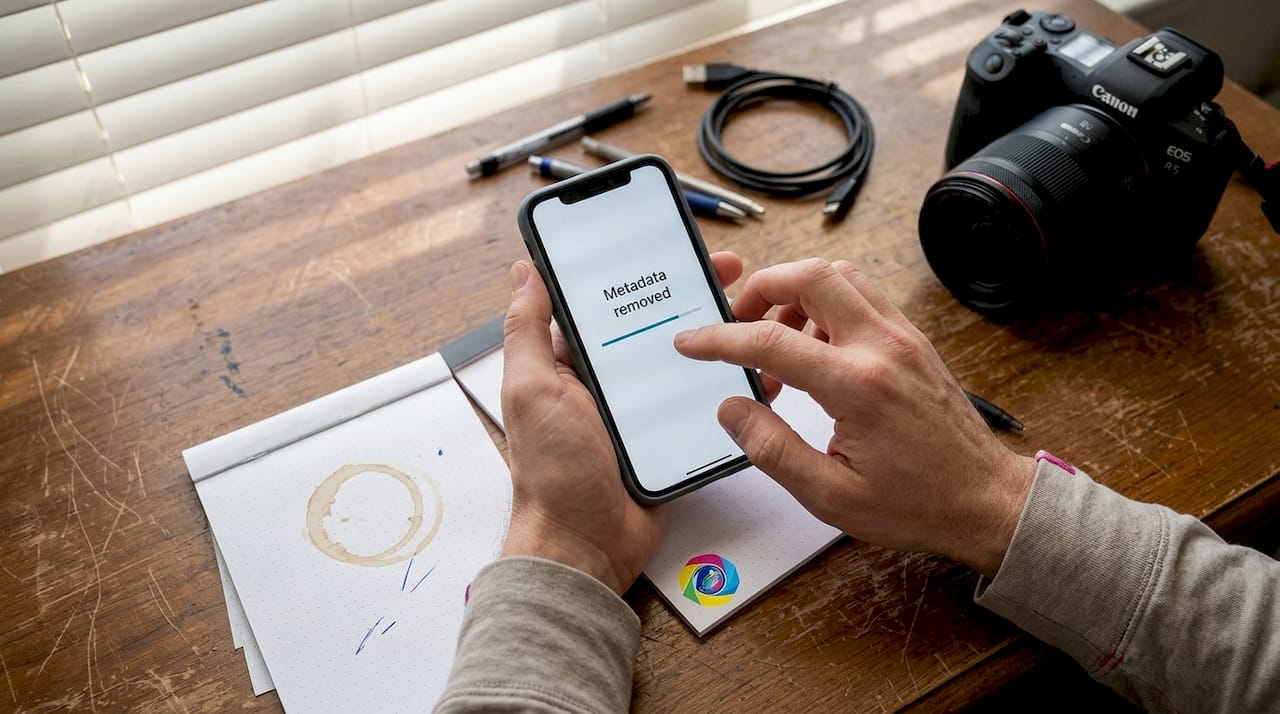
Geotagging is another silent risk. Enabling location on your stories or posts tells followers where you are in real time. That is a safety issue for individual creators and a competitive intelligence issue for brands.
Third-party integrations are equally dangerous. Scheduling tools, analytics dashboards, and collaboration apps often request broad account permissions. If any of those tools get breached, so does your account.
Pro Tip: Check your connected apps list on every platform at least once a month. Revoke access for any tool you no longer use actively. On Instagram, go to Settings > Security > Apps and Websites. On Facebook, visit Settings > Security > Apps and Websites. These lists grow silently over time.
Consequences of ignoring social media privacy
Ignoring privacy is not just a personal risk. It is a business risk with measurable financial and reputational costs.
When privacy fails, creators face a cascading set of consequences. Original content gets stolen and monetized by others. Brand partners pull out of deals when they see an account flagged for violations. Audiences lose confidence when they feel their data has been mishandled. And platforms take action quickly once a pattern of violations is detected.
Here are the most common penalties creators face:
- Demonetization: Loss of ad revenue or partnership eligibility following a policy violation
- Shadowbanning: Reduced reach and discoverability without any formal notification
- Temporary account suspension: Locked out after a suspicious login or TOS breach
- Permanent ban: Reserved for repeat violations or serious breaches like impersonation or unauthorized data collection
- Legal action: Copyright infringement, defamation, or privacy law violations can escalate to lawsuits
- Public reputation damage: Viral call-outs, press coverage of a breach, or loss of follower trust
Platforms are enforcing stricter rules in 2026. As content moderation strategies show, poor privacy protection leads to growing legal risks, especially as platform rules become stricter to protect users. TikTok, Meta, and X have all updated their community guidelines in the past 18 months to specifically address data misuse and duplicate content detection.
One underappreciated risk is duplicate content penalties. Posting the same image across multiple accounts without modifying its metadata or visual properties triggers automated detection systems. Platforms treat this as coordinated inauthentic behavior, which can get all associated accounts flagged simultaneously. Learning how to anonymize images before cross-posting is one of the most effective ways to avoid this outcome.
Practical steps for safeguarding your content and audience
Privacy protection does not have to be complicated. A structured approach across four key areas covers most of the risk.
Step 1: Audit your settings. Go through every platform account and verify that your visibility, tagging, and sharing settings match your actual intentions. Public profiles should still have controlled tagging. Private profiles should verify who can send messages or view stories.
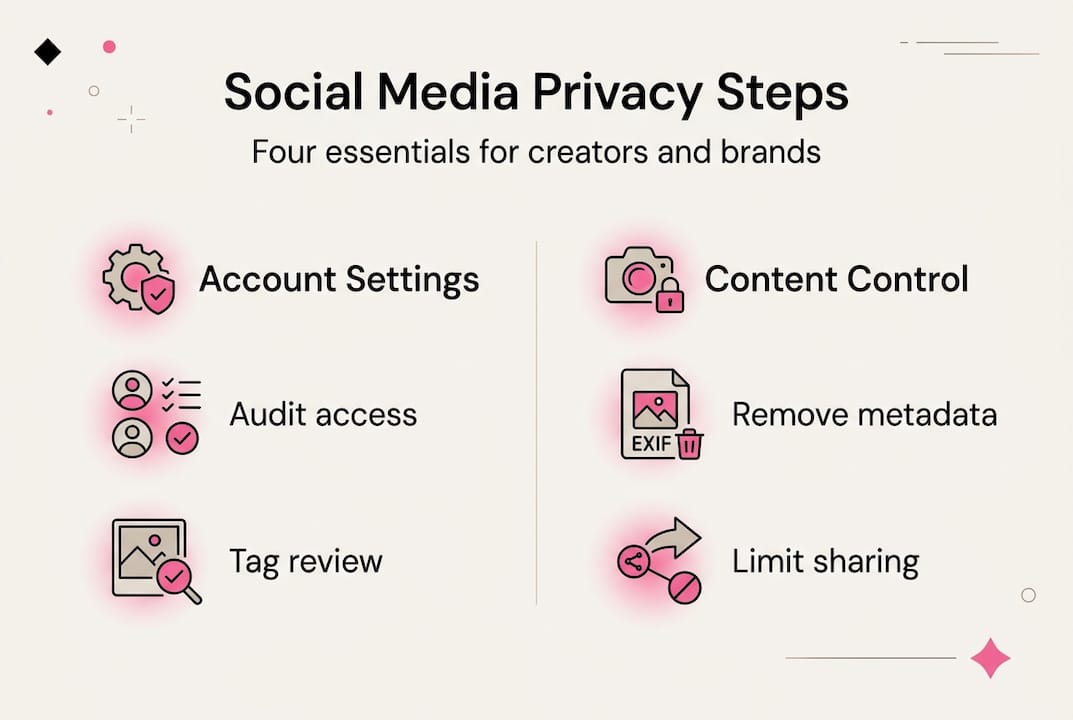
Step 2: Control how you are tagged. Enable tag review on Instagram and Facebook so that no post or photo can appear on your profile without your approval. This prevents unwanted associations from affecting your brand.
Step 3: Anonymize your metadata. Before uploading any image, strip embedded location, device, and timestamp data. Our guide to anonymizing images explains how anonymizing media and using advanced privacy settings are key steps to guard both creator and audience from misuse.
Step 4: Restrict API and app access. Review every connected app, limit data access to the minimum needed, and remove apps that are no longer active.
Here is how each strategy affects your overall penalty risk:
| Privacy action | Risk area addressed | Estimated risk reduction |
|---|---|---|
| Anonymize image metadata | Duplicate detection, location exposure | High |
| Enable tag review | Unauthorized content association | Medium |
| Revoke unused app access | Account breach, data scraping | High |
| Use strong 2FA | Unauthorized logins | Very high |
| Audit settings quarterly | Cumulative drift in settings | Medium |
Useful tools to add to your workflow:
- Metadata removal tools: ExifTool, ImageOptim, or One2Many.pics for batch processing
- DMCA takedown services: Pixsy, DMCA.com for fast content removal requests
- Password managers: Bitwarden or 1Password to secure platform credentials
- VPN services: Add a layer of protection when managing accounts on public networks
Pro Tip: Schedule a 15-minute privacy audit at the start of each month. Review connected apps, check your settings, and scan for any unauthorized use of your branded content. Treat it like a financial check-in. Understanding your data privacy rights also helps you act fast if a platform or third party misuses your data.
Why smart privacy transforms your social impact
Here is a perspective most privacy guides skip entirely. Privacy is not just a defensive measure. It is an active growth strategy for creators who understand how trust works online.
Creators who openly practice strong privacy habits build something rare: verifiable credibility. When your audience knows you handle data carefully, protect your content, and take platform rules seriously, they feel safer engaging with you. That safety translates into higher engagement, longer follows, and stronger word-of-mouth.
We have seen creators flip the script entirely. Instead of treating privacy as overhead, they use it as a brand differentiator. They talk about it in their content. They show their process. They explain why they strip metadata before posting. Audiences respond to that transparency.
Early adopters of privacy best practices also tend to avoid the chaotic scrambles that come with platform policy changes. When TikTok or Meta tightens rules, creators with solid privacy foundations barely notice. Those without them suddenly face bans, reduced reach, or account reviews.
Privacy also opens doors to better collaborations. Agencies and brands want partners who will not accidentally expose campaign assets, leak content ahead of launch, or trigger platform flags through careless cross-posting. If you want to strengthen your content privacy and use it as a competitive edge, that positioning alone can make you a more attractive partner.
Enhance your privacy with the right tools
Understanding privacy strategy is only half the work. Putting it into practice consistently, at scale, across multiple accounts and platforms, is where most creators struggle.
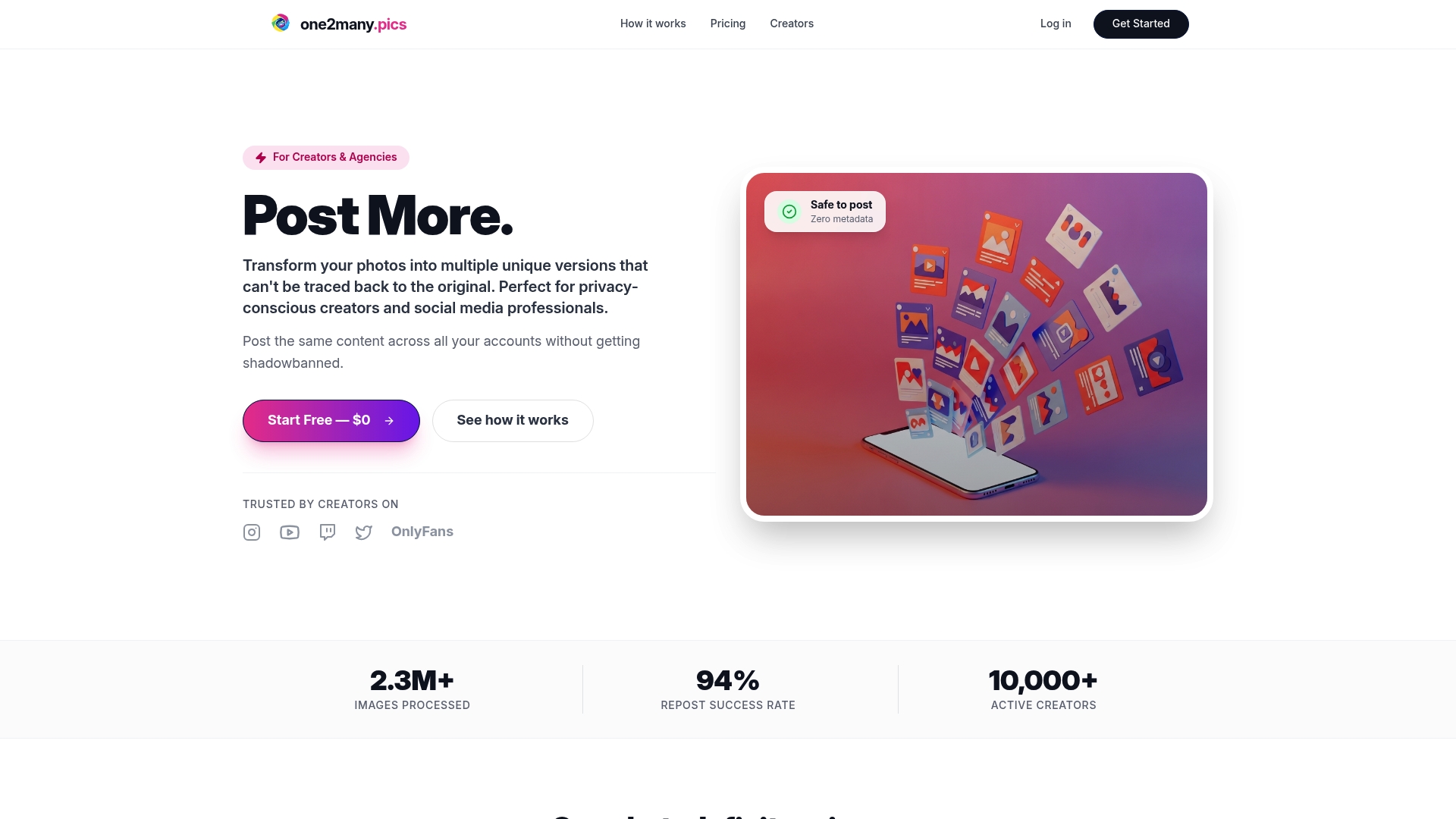
That is exactly where purpose-built tools make the difference. One2Many.pics is built specifically for creators and managers who need to post across accounts without triggering duplicate detection, exposing metadata, or risking platform penalties. You can generate unique visual variations of each image, strip all embedded data, and download clean files ready for any platform. Whether you manage one account or fifty, the platform scales with your workflow. Explore untraceable social media images and see how anonymizing content can become a seamless part of your daily process.
Frequently asked questions
What are the quickest privacy fixes for content creators?
Immediately check your platform settings, anonymize images before uploading, and revoke access for any third-party apps you no longer use. These three steps address the most common exposure points right away.
How can privacy lapses affect my brand or account?
Lapses can result in platform penalties, loss of audience trust, and even legal action against you or your brand. As stricter enforcement grows, poor privacy protection leads to growing reputation risks that are hard to recover from.
Are privacy settings the same across social media platforms?
No. Each platform offers different privacy management tools, and default visibility settings vary widely. You should review and customize settings on every platform individually.
How can I keep my audience safe when sharing user-generated content?
Obtain consent before reposting, anonymize any identifying data in images, and use platform-specific tools to control sharing permissions. Anonymizing media before sharing protects your audience as well as yourself.