

Most creators assume their content reaches followers equally across platforms. It doesn't. User studies show that 9 to 10% of users experience shadowbanning on major platforms, meaning a significant slice of your audience may never see your posts. The rules are invisible, enforcement is automated, and appeals often go nowhere. Privacy-focused platforms are emerging as a genuine alternative, offering creators and marketers real control over content distribution without the fear of silent suppression.
Table of Contents
- Understanding shadowbanning and platform risks
- How privacy-focused platforms reduce shadowbanning
- Comparing privacy and engagement across social platforms
- Building content resilience: Why channel diversification matters
- Why data sovereignty, not just privacy, is the missing piece
- Put privacy-first content management into action
- Frequently asked questions
Key Takeaways
| Point | Details |
|---|---|
| Shadowbanning is widespread | Up to 9-10% of users face shadowbans, usually without warning or clarity. |
| Privacy platforms minimize risk | Decentralized networks avoid algorithm-driven moderation, offering creators more control. |
| Data sovereignty is crucial | Owning your content and audience relationships protects you from platform changes and risks. |
| Diversify for content resilience | Utilize multiple platforms and maintain owned channels for safer, more sustainable reach. |
| Chronological feeds boost engagement | Privacy platforms prioritize consistent content visibility and authentic audience interaction. |
Understanding shadowbanning and platform risks
Shadowbanning is one of the most frustrating things that can happen to a creator. Your account looks completely normal to you. You post, you comment, you engage. But your content quietly disappears from search results, hashtags, and recommendation feeds for everyone else. No warning. No explanation.
The reality is that centralized platforms like Instagram, TikTok, and X use opaque algorithms that can suppress content based on spammy behavior, repetitive content patterns, or proximity to policy edge cases. You don't need to break the rules outright. Sometimes posting too frequently, using overused hashtags, or sharing visually similar images across accounts is enough to trigger automated filters.
Here's what makes this particularly damaging for professional creators:
- Engagement drops overnight without any account notification or appeal path
- Growth stalls right when momentum should be building
- Revenue takes a hit because brand partnerships depend on reach metrics
- Detection is delayed because your own account view never changes
"Shadowbanning is insidious precisely because the affected user has no idea it's happening. You keep investing time and content while the platform quietly limits your distribution." This invisible penalty is why many creators are actively looking for alternatives or supplementary strategies.
The algorithm problem runs deeper than most creators realize. Platforms optimize for engagement that keeps users on their apps, not for content quality or creator success. That means your reach is always secondary to platform retention goals. If your content style or frequency gets flagged, you're at the mercy of systems you cannot see or influence. The best way to start protecting yourself is to safeguard your accounts before a problem occurs rather than scrambling to recover from one.
How privacy-focused platforms reduce shadowbanning
Privacy-focused platforms approach content distribution from a fundamentally different angle. Instead of building data profiles on users to fuel advertising engines, these platforms limit what they collect and prioritize straightforward content delivery.
Platforms like Mastodon, Pixelfed, and other decentralized networks minimize data collection and algorithmic manipulation, which means your posts reach followers without being filtered through engagement-optimization systems. There's no machine deciding whether your content deserves distribution today based on yesterday's performance metrics.
One of the clearest practical benefits is feed structure. Privacy platforms use chronological feeds instead of engagement-driven algorithms, so your posts show up in the order they're published. Your audience sees your work consistently, not just when the algorithm feels like amplifying it.
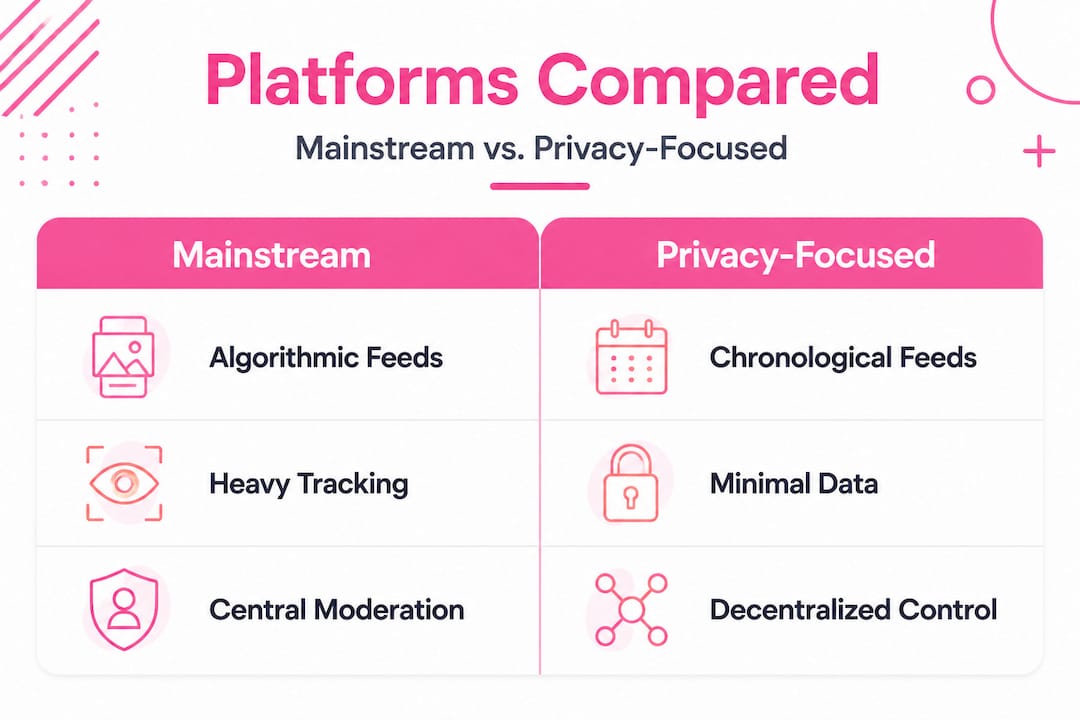
| Feature | Mainstream platforms | Privacy-focused platforms |
|---|---|---|
| Feed type | Algorithmic, engagement-driven | Chronological, time-based |
| Data collection | Extensive behavioral tracking | Minimal or no tracking |
| Content moderation | Centralized, automated | Decentralized or community-driven |
| Shadowban risk | High, opaque triggers | Low to none |
| Creator control | Limited by platform rules | Higher autonomy |
The decentralized architecture matters more than most creators appreciate. On a network like Mastodon, there's no single company controlling what gets shown and to whom. Server administrators set community rules, but no central authority can silently suppress content across the entire network. That structural difference alone removes the biggest risk mainstream platforms create.
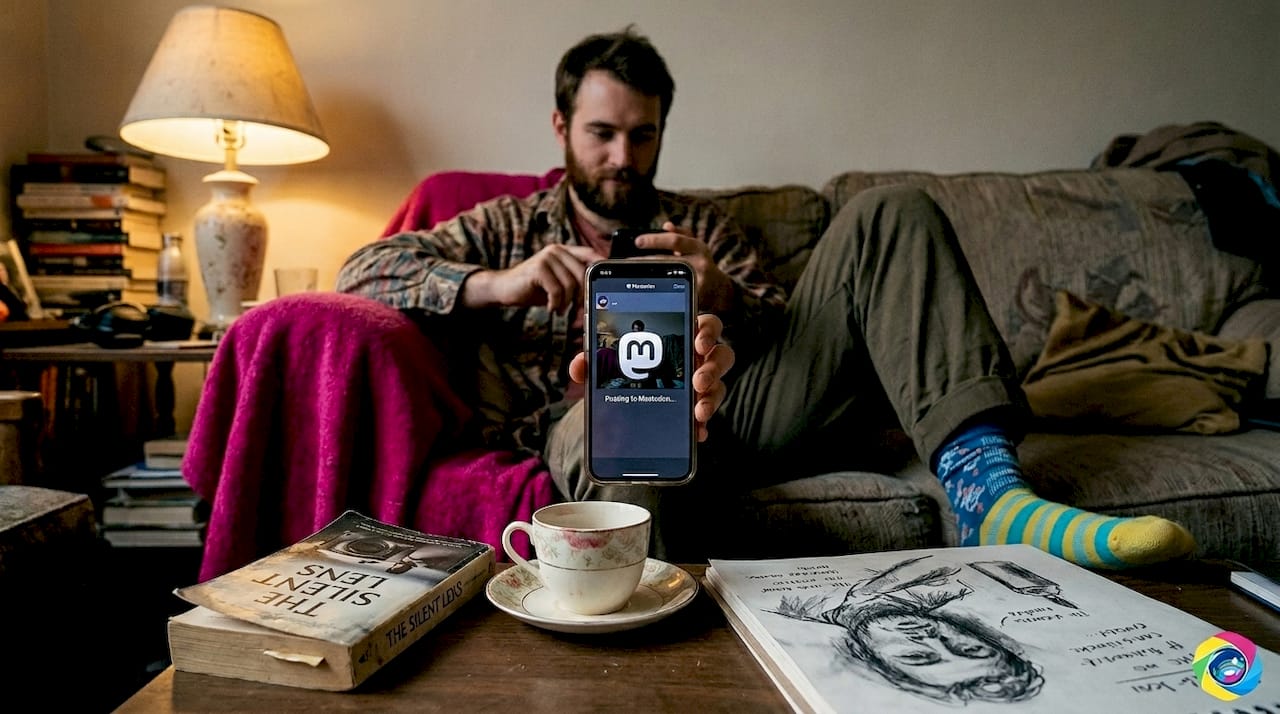
Pro Tip: When setting up on a privacy-focused platform, take time to learn your instance rules and community culture. Smaller, engaged audiences on these networks often convert far better than passive followers on algorithm-driven platforms because those followers opted in deliberately.
For creators managing content across accounts, learning to anonymize images before posting is another layer of protection that works regardless of which platform you're using. Metadata embedded in images can reveal device information, timestamps, and location data that platforms use to identify and link accounts.
Comparing privacy and engagement across social platforms
Understanding which platforms offer the best privacy protections helps you make smarter decisions about where to invest your content energy. Not every privacy-focused platform is equal, and even mainstream platforms differ significantly in how aggressively they track and profile users.
Kaspersky rates Pinterest and Quora highest for privacy among social platforms, citing minimal data collection compared to Facebook, Instagram, and TikTok, which sit at the opposite end of the spectrum. This matters for creators because platforms with heavier data collection are also more likely to deploy the kind of behavioral tracking that feeds shadowbanning algorithms.
Here's a practical breakdown of major platforms based on privacy and creator risk:
| Platform | Privacy rating | Shadowban risk | Algorithm control | Best for |
|---|---|---|---|---|
| Low | Very high | Heavy | Visual brands with big budgets | |
| TikTok | Very low | High | Heavy | Viral content, short form |
| X (Twitter) | Low | High | Moderate | News, real-time engagement |
| High | Low | Moderate | Visual discovery, evergreen content | |
| Mastodon | Very high | Very low | None | Community-focused creators |
| Pixelfed | Very high | Very low | None | Photographers, visual creators |
| Quora | High | Low | Low | Thought leaders, writers |
A few important patterns emerge from this data:
- High data collection correlates directly with higher shadowban risk because platforms with more behavioral data also deploy more aggressive automated moderation
- Platforms with chronological feeds produce more predictable reach since your distribution doesn't depend on how well your last post performed
- Smaller platforms often deliver higher engagement per follower because audiences on privacy-focused networks are typically more intentional in who they follow
The reach numbers on mainstream platforms look impressive until you account for the suppression rates. A creator with 50,000 followers on Instagram might reach 2,000 to 5,000 people per post depending on algorithm favor. A creator with 8,000 genuinely engaged followers on Mastodon or Pixelfed might reach 6,000 of them consistently. The absolute number is smaller, but the reliable visibility can be far more valuable for building loyal audiences and sustainable partnerships.
Building content resilience: Why channel diversification matters
Relying on a single platform for your content distribution is one of the highest-risk strategies a creator or marketer can run. Algorithms change. Accounts get penalized. Platforms decline in relevance. Entire categories of creators have watched years of growth evaporate when a platform updated its moderation policies overnight.
Privacy platforms enable better content management through data sovereignty, reducing shadowban risks because there are no central algorithms selectively filtering your content. But even with these advantages, smaller audiences on privacy-focused platforms mean that owned channels like email lists are essential for creators who want true resilience. A platform can shadow ban you or disappear entirely. Your email list belongs to you.
Here's a practical framework for building content resilience step by step:
- Audit your current platform risk. Identify which platforms you depend on most and check whether you've experienced unexplained engagement drops, hashtag invisibility, or sudden reach changes.
- Establish a presence on at least one privacy-focused platform. Pixelfed works well for visual creators. Mastodon suits community builders. Both give you a content distribution path that doesn't depend on an algorithm's mood.
- Build an owned audience channel. An email newsletter is the most reliable option. Platforms come and go, but an email list you export and own is yours permanently.
- Create a content calendar that spans channels. Repurpose content across platforms without copying it identically. Variation protects you from duplicate detection penalties on mainstream platforms.
- Strip metadata from images before cross-posting. Exif data, device identifiers, and location tags embedded in your images can link accounts and trigger suppression. Remove them before every upload.
- Review your diversification strategy quarterly. Platform policies and algorithm behaviors shift constantly. What worked six months ago might be a risk factor today.
Pro Tip: Don't wait until you're shadowbanned to build your email list. The best time to establish owned channels is when your reach is healthy and you have momentum to convert followers into subscribers.
Decentralized platforms like Bluesky handle moderation very differently from Instagram or TikTok, relying on user-driven tools like blocking rather than central algorithmic suppression. This self-moderation model means you have far more visibility into why your content might be restricted and more agency to address it.
Content resilience isn't just about surviving platform penalties. It's about building a content ecosystem where your audience can always find you, regardless of what any single platform decides to do with your account. That kind of independence is what separates creators who last years from those who disappear when an algorithm updates.
Why data sovereignty, not just privacy, is the missing piece
Here's the perspective most articles won't give you: privacy is a means to an end, not the end itself. Chasing privacy protections is valuable, but the real goal is data sovereignty. That's the ability to own your audience relationships, control your content destiny, and operate independently from platform gatekeepers.
The distinction matters because privacy-focused platforms still have limitations. They have smaller user bases. They have community-specific cultures. They may not suit every content format or audience demographic. If you switch to Mastodon but don't build any owned channels or audience relationships, you've moved from one kind of dependency to another.
Privacy-focused platforms like Mastodon, Pixelfed, and decentralized networks give creators direct control over content and audience relationships, which is genuinely powerful. But data sovereignty means going further. It means knowing who your audience is, being able to reach them without a platform intermediary, and having the ability to protect your privacy at the image and metadata level, not just the account level.
Most creators treat platform choice as the whole strategy. It isn't. Platform choice is one variable in a larger system. The creators who build durable careers are the ones who use every platform as a traffic source pointing toward owned assets, not as a home. Your Instagram profile, your Pixelfed presence, your TikTok account: all of these should be funnels driving audiences to your email list, your community, your website.
That's data sovereignty in practice. When you own the relationship, no algorithm can suppress it.
Put privacy-first content management into action
Shifting toward privacy-first content management doesn't have to be complicated, and the tools that support this shift are more accessible than ever.
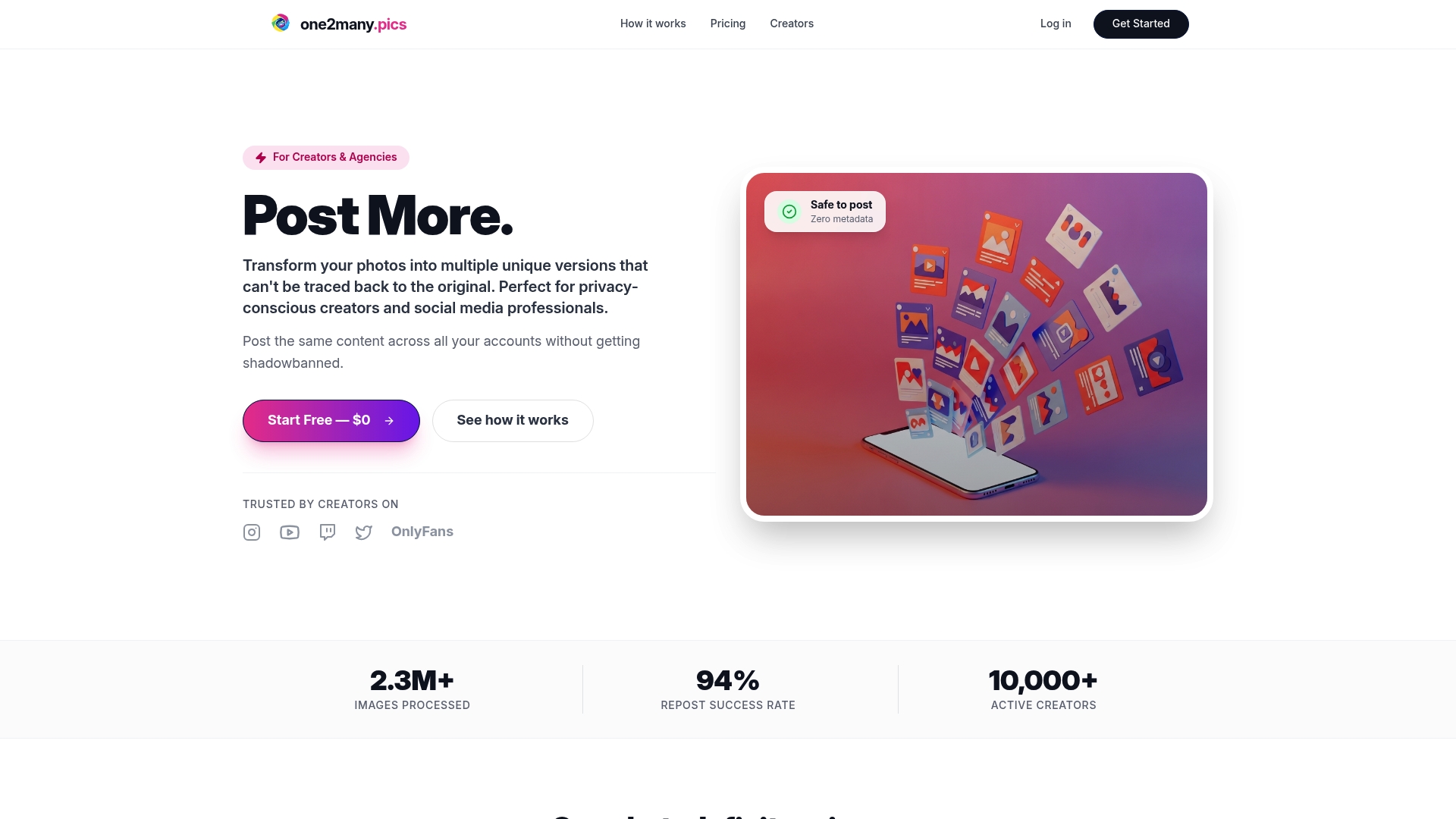
One2Many.pics helps creators and marketers take control of how their images are identified and tracked across platforms. By stripping metadata and generating visually unique variations of your images, the platform removes the digital fingerprints that link accounts and trigger duplicate content detection. When you create untraceable social media images before posting across multiple accounts or platforms, you reduce the risk of algorithmic suppression while keeping your content strategy flexible and scalable. Whether you're managing one account or dozens, the platform's subscription options fit different workflow needs from individual creators to agency-scale teams. You can also explore affiliate privacy solutions if you want to extend these protections to your network or monetize privacy-focused tools within your community.
Frequently asked questions
What is a privacy-focused platform?
Privacy-focused platforms like Mastodon and Pixelfed limit data collection and use decentralized moderation to give users more control over their content and audience relationships, without the behavioral tracking that drives algorithmic suppression on mainstream networks.
How does shadowbanning happen?
Shadowbanning occurs when platforms use opaque algorithms to restrict content visibility, often triggered by repetitive posts, overused hashtags, or behavior that resembles spam, all without notifying the creator that their reach has been suppressed.
Which social platforms are best for privacy?
Kaspersky rates Pinterest and Quora highest for privacy among social platforms, with minimal data tracking, while Mastodon and Pixelfed offer even stronger protections through decentralized architecture and no advertising-based data collection.
Can privacy platforms still moderate content?
Yes, but moderation is decentralized or user-driven. Bluesky relies on user self-moderation through blocking tools rather than centralized algorithmic suppression, giving users far more transparency and agency over how restrictions work.
How can creators safeguard their content and reach?
Diversify across multiple platforms and maintain owned channels like email newsletters because, as data sovereignty research confirms, smaller privacy-platform audiences make owned channels essential for protecting long-term reach from algorithmic risk.