

Every social media manager knows the feeling: you've created solid content, but you're terrified to repost it, repurpose it, or use it across accounts because you don't know if the algorithm will bury it, flag it as duplicate, or worse, expose your digital footprint. That tension between scaling your content strategy and staying safe is real. The good news is that with the right framework for visual content diversification, you can feed algorithms what they want, protect your privacy, and keep your audience genuinely engaged across every platform you manage.
Table of Contents
- Key criteria for effective visual content diversification
- Top visual content variations for social platforms
- How to transform assets for platform-proof variations
- Choosing the right content variation for your audience
- Our take: Why real content transformation wins over minor tweaks
- Expand your reach with privacy-first visual content tools
- Frequently asked questions
Key Takeaways
| Point | Details |
|---|---|
| Diversification boosts algorithm reach | Switching formats, concepts, and aesthetics helps avoid redundancy penalties and increases engagement. |
| Transformation beats simple edits | Multi-layer content changes outperform filters and crops for privacy and algorithm detection. |
| Choose format by audience type | Polished visuals appeal to logic, raw visuals to emotion; select based on your target psychographics. |
| Repurpose efficiently for scale | Convert assets across formats like video-to-short, frame-to-static for more reach with less effort. |
| Privacy protection matters | Anonymize visuals and diversify deeply to prevent image fingerprinting and tracing on social platforms. |
Key criteria for effective visual content diversification
Before you start creating or repurposing assets, you need a decision framework. Not all variations are created equal. Some will boost your reach, others will trigger duplicate detection, and a handful of mistakes can leave a traceable trail connecting your accounts.
Here's what to evaluate before you choose or create any visual content variation:
- Format diversity: Mix videos, static images, carousels, and graphics. Each format triggers different algorithm signals and engages different audience behaviors.
- Conceptual variation: According to creative diversification methodologies, varying concepts across logical, emotional, and social proof angles feeds algorithms distinct inputs and prevents redundancy penalties on platforms like Meta.
- Visual aesthetic range: Move between polished, brand-heavy visuals and raw, authentic lo-fi content. These aren't just stylistic choices. They target entirely different user psychographics.
- Privacy safeguards: Every image you post carries metadata, including GPS coordinates, device identifiers, and timestamps. Protecting privacy on social networks starts with stripping that data before uploading.
- Algorithm reward logic: Platforms reward transformation, not iteration. A cosmetic change like adding a filter doesn't register as new content. Genuine structural changes do.
Pro Tip: Before building your content calendar, sort your planned posts into three buckets: logical (how-to, data), emotional (story-driven, relatable), and social proof (reviews, testimonials). Then map a different visual format to each bucket. This keeps your feed diverse in ways that algorithms actually notice.
The goal here is to stop treating content diversification as an afterthought. When you plan variation intentionally, you reduce ad fatigue, protect your accounts, and give each piece of content a real chance at organic reach.
Top visual content variations for social platforms
With the criteria established, here are the most effective content types and what the data says about each.
Common visual content variations for social media include short-form videos like Reels, Shorts, and TikToks, plus photo carousels, static images, graphic carousels, infographics, GIFs, long-form videos, and live streams. Each serves a different purpose in your content mix.
Here's how they stack up based on real engagement data:
| Content type | Platform strength | Engagement rate | Best use case |
|---|---|---|---|
| Photo carousel | 0.55% ER | Sequential storytelling, tutorials | |
| Reels/Short video | Instagram, TikTok | 0.52% ER (IG), 4.25% ER (TT) | Brand awareness, entertainment |
| Static image | All platforms | Moderate | Quotes, product shots, announcements |
| Infographic | Pinterest, LinkedIn | High save rate | Data, comparisons, how-to content |
| GIF/Animation | Twitter, Reddit | High interaction | Humor, reactions, micro-demonstrations |
| Live stream | Instagram, YouTube | Real-time spike | Q&A, launches, community events |
According to empirical benchmarks, carousels achieve 0.55% engagement on Instagram year over year, Reels sit at 0.52%, and TikTok's median engagement runs at 4.25%. Videos generate 1,200% more shares than text and image content combined, and custom graphics outperform stock photos by 40% in engagement.
That 40% gap between custom and stock imagery is significant. When you use generic stock photos, audiences recognize them. Trust drops instantly.
Here's a quick breakdown of when to use each variation:
- Short-form video (under 60 seconds): Best for trend-riding, product demos, and entertainment. The TikTok algorithm heavily favors original audio, motion, and completion rate.
- Photo carousels: Ideal for tutorials, before-and-after, and storytelling arcs. Each swipe signals engagement to the algorithm.
- Infographics: High save rates on Pinterest and LinkedIn. Great for positioning yourself as an authority in your niche.
- Live streams: Generate real-time engagement spikes. Useful for launches and community building but require strong social media security best practices since live content can expose location data.
- GIFs and animations: Low production cost, high interaction rate. Works well for humor and brand personality moments.
Pro Tip: When anonymizing images for privacy before uploading, check whether your tool also handles video metadata. Many creators strip EXIF data from photos but overlook GPS tags embedded in video files recorded on a smartphone.
How to transform assets for platform-proof variations
Understanding what's effective, here's how to actually create safe, diverse variants and why simple edits aren't enough.
This is where most social media managers hit a wall. They crop an image, apply a filter, swap out a logo, and call it a new piece of content. That approach fails.
"Superficial edits like filters and crops fail against AI duplicate detection tools like Meta's SSCD and TikTok's 85% similarity threshold. True diversification requires multi-layer changes including speed adjustments, music swaps, overlays, and format shifts." Source: Edge case: Superficial edits
Platforms are using machine learning at scale to detect visual similarity. Meta's SSCD (Self-Supervised Copy Detection) and TikTok's content matching algorithm both operate well below what the human eye can notice. Two images can look visually different to you but score above an 85% similarity threshold in the system, triggering suppression.
Here's a step-by-step process for genuine multi-layer transformation:
- Start with format conversion. A video clip becomes a carousel of key frames. A carousel becomes a single-image highlight. A talking-head video becomes an audiogram or GIF.
- Change the visual composition. Shift the focal point, alter the background completely, or switch from a tight crop to a wide shot. Composition changes register as structural differences in AI detection.
- Adjust timing and pacing. For video, change playback speed subtly (0.95x or 1.05x), add a short intro sequence, or reorder scenes. These changes disrupt similarity scoring.
- Layer new elements. Add text overlays, stickers, motion graphics, or music tracks. These overlays change the pixel-level signature of the file.
- Strip and regenerate metadata. Before uploading, remove all original metadata including device info, location tags, timestamps, and software signatures. The safe image anonymization guide explains how each metadata field can connect your accounts or expose your location.
- Export in a different format. A JPEG becomes a PNG, or a .mp4 exports with different codec settings. While not always sufficient alone, format changes as part of a broader strategy add another layer of differentiation.
Good impactful visual storytelling isn't just about aesthetics. It's about structuring your content so each piece works independently while connecting to a larger narrative. When you repurpose with intention, you're not duplicating. You're extending a story.
One more practical point: prioritize vertical formats. The 9:16 aspect ratio (standard for Reels, Shorts, and TikTok) dominates mobile consumption. A horizontal video that performs moderately gets a significant reach boost when reformatted vertically and posted as a Reel. That format shift alone qualifies as meaningful transformation in most algorithm assessments. And using fingerprint prevention techniques alongside format changes gives you both algorithmic safety and account-level privacy.
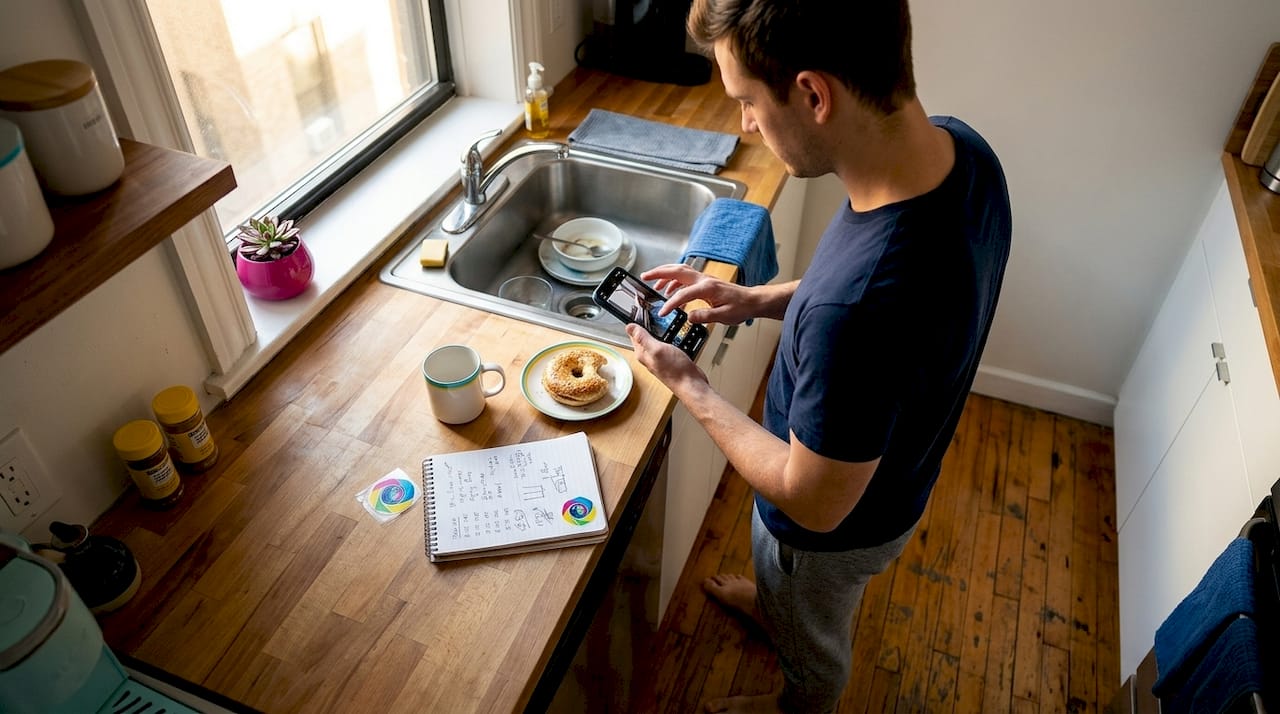
Transformation vs. iteration at a glance:
| Approach | Algorithm detection risk | Privacy risk | Engagement outcome |
|---|---|---|---|
| Filter/crop only | High (flagged as duplicate) | High (metadata intact) | Low (suppressed reach) |
| Format conversion only | Moderate | Moderate | Moderate |
| Multi-layer transformation | Low | Low (with metadata removal) | High |
| Full transformation + anonymization | Very low | Very low | Best possible |
Choosing the right content variation for your audience
Once you've diversified your assets, the next step is matching the right format to your specific audience and goals.
Not every format works for every niche. A B2B LinkedIn audience responds very differently to a lo-fi video than a fashion creator's Instagram audience would. And posting the wrong aesthetic can actively hurt your engagement metrics even when the content itself is excellent.
Here's how to match format to audience:
- Polished, branded visuals work best for audiences driven by aspiration, authority, and purchase intent. Think tech products, luxury services, or professional coaching. These audiences respond to quality as a signal of trustworthiness.
- Raw, authentic content connects with audiences that value relatability and community. Fitness, personal finance, parenting, and lifestyle niches often see higher engagement with unpolished, honest visuals.
- Infographics and data-heavy carousels perform well with analytical audiences on LinkedIn and Pinterest. These readers want to learn, save, and share useful information.
- Short-form video cuts across nearly every audience type, but the editing style needs to match the niche. Fast cuts and trending audio for entertainment audiences. Slower, informative walkthroughs for professional audiences.
As noted in expert nuance research, algorithms explicitly reward transformation over simple iteration. Polished and raw aesthetics target different user psychographics, which prevents ad fatigue and enables scaling without a rising cost per acquisition. In plain terms: using both styles across your content mix keeps your audience fresh and your ad spend efficient.
Audience-specific privacy strategies matter here too. When you manage multiple accounts across different audience segments, you need each account's content to appear genuinely distinct, not just visually different but structurally unconnected at the metadata level.
For creators working across platforms, consider what global storytelling techniques teach us: the most resilient content strategies adapt the same core message to fit the platform's culture and format norms rather than simply reposting the same asset.
Pro Tip: Run a 30-day content split test. Post polished versions of your content to one audience segment and raw versions to another. Track saves, shares, and comments separately from likes. Saves and shares indicate real value. Likes are vanity. The format that generates the most saves wins.
Our take: Why real content transformation wins over minor tweaks
We've seen enough accounts tank after aggressive repurposing to say this clearly: minor tweaks are not a strategy. They're a risk.
The creators and managers who build durable reach aren't the ones who batch-resize and repost. They're the ones who treat each variation as its own creative decision. That mindset shift changes everything.
Here's the uncomfortable truth about superficial edits: they don't just fail to help you. They actively harm you. When Meta's or TikTok's duplicate detection flags your content, the suppression doesn't always come with a notification. Your reach just quietly drops. You keep posting, keep expecting results, and the algorithm has already moved on. That's the real cost of lazy repurposing.
Real transformation requires a bit more effort upfront, but the compounding returns are substantial. An original asset that gets genuinely transformed into five distinct formats, stripped of metadata, and posted with proper anonymization generates five times the reach opportunity with a fraction of the duplication risk.
We also believe that real privacy lessons only fully land when you see the consequences of skipping this step. A single image file with intact GPS metadata can link two separate accounts to the same physical location. That's enough for a platform's systems to treat them as connected, which triggers review, restricted reach, or outright account bans depending on the platform's policies.
The creators scaling successfully in 2026 treat content transformation and privacy management as two sides of the same coin. You can't have genuine reach without both. Shortcuts on either side create compounding vulnerabilities that eventually catch up.
Expand your reach with privacy-first visual content tools
The strategies above work. But implementing multi-layer transformation, stripping metadata, and generating unique visual variations manually across dozens of posts is exhausting. There's a smarter way to scale.
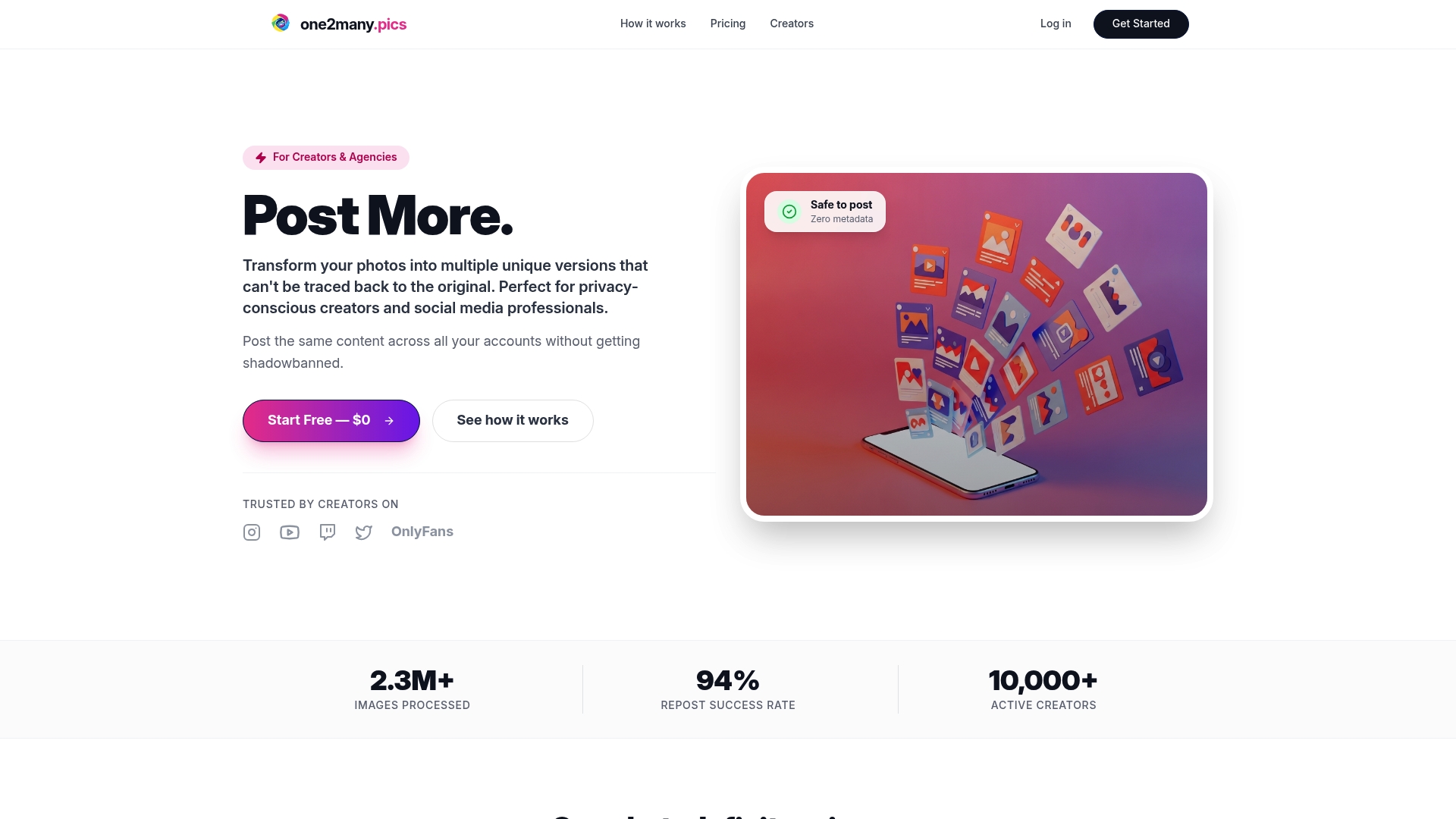
One2Many.pics is built specifically for social media managers and creators who need to move fast without sacrificing privacy or platform safety. Upload your original image, configure your variation settings, and download multiple unique, anonymized versions ready to post across accounts and platforms. The platform removes metadata including location, device info, and timestamps, while generating visual spoofing variations that register as distinct assets to duplicate detection systems. Whether you're managing five accounts or fifty, this is the infrastructure that makes real transformation scalable. If you want to help others protect their content too, the affiliate program lets you earn while empowering your network.
Frequently asked questions
What is the best visual content format for engagement on Instagram?
Carousels currently achieve the highest engagement rate on Instagram at 0.55%, just ahead of Reels at 0.52%, making them the top format for sustained organic engagement.
How do I avoid duplicate content penalties on TikTok or Meta?
Simple filters and crops won't protect you. Platforms use AI detection that requires multi-layer changes including speed adjustments, new overlays, music swaps, and format conversions to register content as genuinely distinct.
Does changing background or color scheme help protect my privacy?
Visual changes help with appearance, but they don't remove embedded metadata. True privacy requires anonymizing your image files at the data level, not just altering what the eye can see.
Is it better to use polished or raw aesthetics on social media?
Neither is universally better. Polished vs. raw aesthetics target different audience psychographics, so using both prevents ad fatigue and broadens your reach across different user types.
How can I repurpose a single asset to maximize efficiency?
The most efficient approach is to convert long video into short clips, extract static frames as images, adjust the format for each platform, and apply aesthetic variations to produce multiple genuinely distinct assets from one original.