
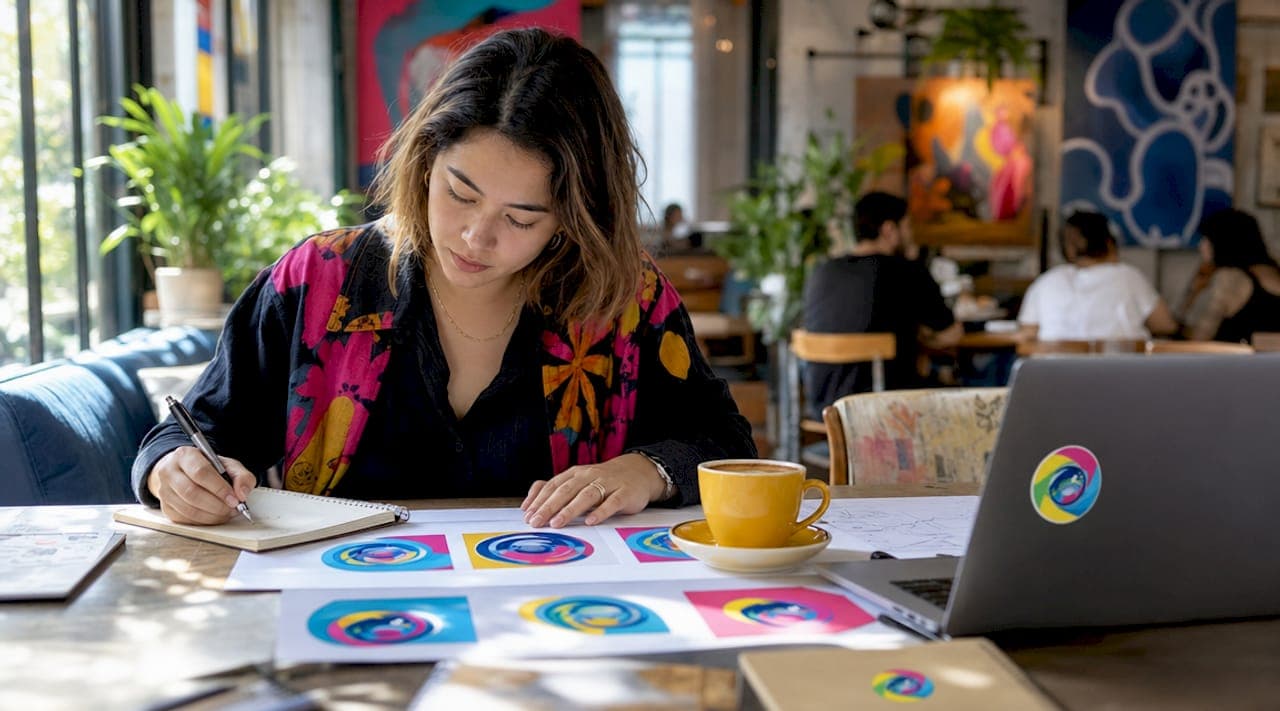
Image variation for agencies is the practice of producing multiple versions of a single core visual by altering specific elements such as color, lighting, background, or composition without rebuilding the asset from scratch. This technique sits at the center of modern social media campaign strategy, where testing speed and platform adaptability directly determine ad performance. Agencies using structured variation workflows generate 50 to 200 or more creative variants per client monthly, reducing production time by 60 to 80% compared to traditional one-off design processes. Tools like Midjourney, the OpenAI Image Variations API, and template-based batch systems have made this scale achievable without sacrificing brand consistency.
What is image variation for agencies and why does it matter?
Image variation means producing multiple versions of the same core visual by varying testable elements like color, lighting, background, or style without redesigning from scratch. For agencies, this is not a creative luxury. It is an operational requirement. Social platforms reward fresh visuals, penalize repeated content, and give algorithms more data to optimize when multiple variants compete in the same campaign.
The standard industry term for this practice is creative variation or ad creative testing, and understanding image variation within that framework helps agencies connect visual production to measurable outcomes. A single hero image repurposed across Instagram, LinkedIn, and Meta Ads without any adaptation is a missed opportunity. Each platform has different aspect ratios, audience expectations, and content norms. Variation solves all three problems simultaneously.
Agencies that treat image variation as a systematic process rather than an ad hoc task see compounding returns. Each variant generates performance data. That data informs the next round of production. Over time, the agency builds a proprietary knowledge base about what visual elements drive results for each client and audience segment.
What are the main types of image variations agencies use?
Variation intensity falls into three categories, and each serves a different testing purpose.
| Variation type | What changes | Best used for |
|---|---|---|
| Light | Color shifts, crop adjustments, minor lighting tweaks | Platform format adaptation, audience segmentation |
| Medium | Composition angle, background swap, subject repositioning | Creative fatigue refresh, A/B testing |
| Strong | Art style, visual metaphor, major thematic shift | Brand campaign pivots, new audience targeting |
Light variations preserve nearly all visual DNA. They are the right tool when an agency needs to adapt a single approved asset for multiple placements without triggering a full creative review. Medium variations introduce enough difference to test distinct creative hypotheses while keeping the brand recognizable. Strong variations are reserved for situations where the data clearly shows the existing creative direction is underperforming.

Midjourney's Subtle vs Strong modes illustrate this spectrum precisely. Subtle mode tweaks small details while maintaining the core theme. Strong mode generates bold new creative directions from the same source. Agencies can use this distinction as a mental model even when working outside Midjourney, applying it to any AI generation or template-based workflow.
Pro Tip: When briefing a variation batch, specify the variation type explicitly in the brief. "Light variation for mobile crop" and "strong variation for new audience test" produce very different outputs and require different approval criteria.
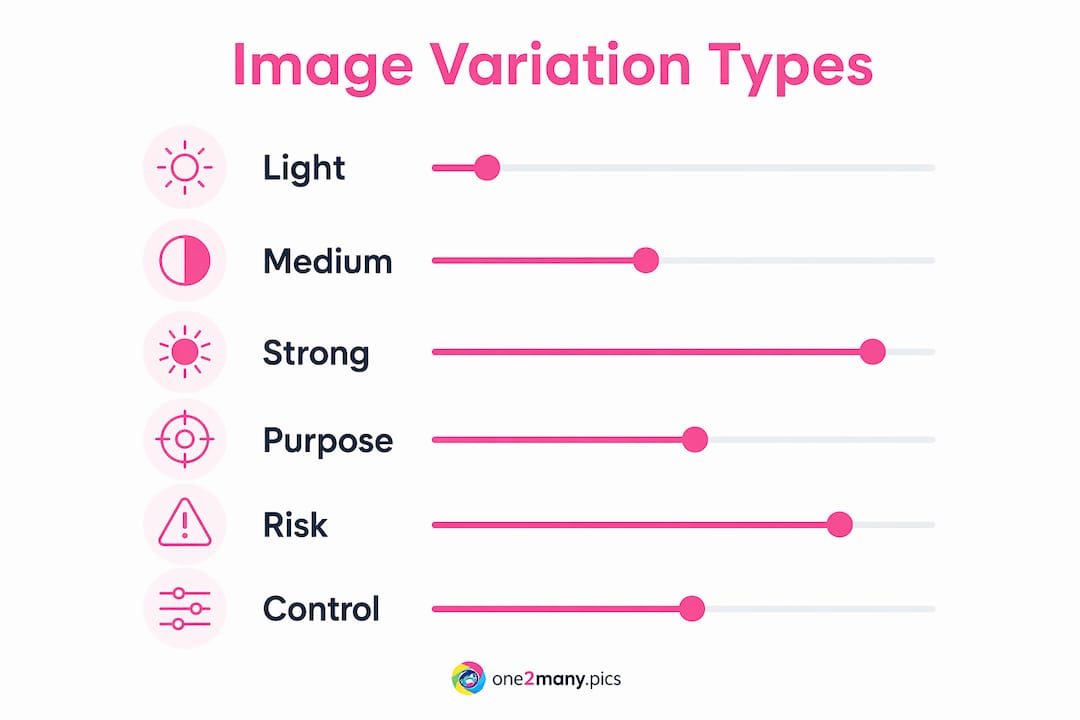
Brand identity risk increases with variation intensity. Light and medium variations rarely require full brand review. Strong variations should always pass through a brand guardian before entering a live campaign.
How do agencies implement image variation workflows to scale creative production?
Scaling from a handful of variants to hundreds per month requires a defined production pipeline, not just better tools. Agencies that reduce production time by 60 to 80% and increase output 4 to 5 times do so through a combination of templates, batch processing, and AI-assisted workflows. The process typically follows this sequence:
- Establish a master approved asset. Every variation batch starts from a single source of truth. This asset has passed brand review and serves as the visual anchor for all derivatives.
- Define variation axes. Specify which elements will change across the batch: scene, style, crop, color, or overlays. Isolating variables on distinct axes ensures test results are meaningful rather than confounded.
- Generate variants in batch. Use AI tools or template systems to produce the full variant set in one production run. The OpenAI Image Variations API, for example, creates stylistic alternatives from a single source image with no text prompts required.
- Run a grid review. Present all candidates in a grid format before selecting individual frames. Grid reviews combined with frame splitting improve both workflow speed and creative control, allowing teams to make rapid decisions across large batches.
- Apply naming conventions and metadata tagging. Each approved variant receives a structured filename that encodes client, campaign, variation type, and version number. This prevents version confusion during deployment.
- Export in platform-specific formats. A single approved variant typically needs three to five format adaptations for different placements. Batch export handles this without additional creative work.
Pro Tip: Treat your naming convention as a data schema. A filename like CLIENT_CAMPAIGN_LIGHT_V2_1080x1080 tells every team member exactly what they are looking at without opening the file.
An AI image agent takes this further by integrating generation, retouching, export, and approval tracking into a single pipeline. Rather than a simple creative tool, an AI image agent acts as a full production pipeline that connects briefs to final exports with approval checkpoints at each stage. For agencies managing multiple clients simultaneously, this architecture is the difference between controlled scaling and creative chaos.
Why does image variation matter for social media campaign performance?
The performance case for systematic variation is direct. Systematic A/B testing of image variations on social platforms reveals 10 to 30% differences in click-through rates between variants. That range means the difference between a campaign that breaks even and one that delivers strong return on ad spend. No single "best" creative exists in advance. The data selects it.
Social platforms present a specific testing challenge. Native A/B testing tools on platforms like Meta Ads Manager and LinkedIn Campaign Manager allow some controlled rotation, but they do not expose granular image-level performance data in all placements. Agencies compensate by running manual controlled rotations: launching two to four variants simultaneously, isolating the image as the only variable, and pulling performance data after a statistically meaningful impression threshold.
"Variation should not be random. Keep approved identities stable while varying only hypothesis-relevant image elements to maintain brand consistency and learning clarity." — Incremys AI Image Agent Guide
The practical implication is that every variation batch needs a test specification before production begins. That specification defines the goal, the audience segment, the message being tested, the constraints, and the acceptance criteria. Without it, agencies generate variants that cannot produce actionable learning. With it, each batch contributes to a growing body of client-specific visual intelligence.
For agencies managing visual content variations across multiple platforms, this data-driven approach also protects against content suppression. Platforms that detect duplicate or near-duplicate images reduce organic reach. Structured variation prevents that penalty while simultaneously generating performance data.
How do AI-powered tools automate image variation at scale?
AI tools have changed the economics of variation production. What previously required a designer's time for each variant now runs through an API call or a generation interface. The key tools agencies use in 2026 fall into two categories: generation tools and workflow tools.
Generation tools:
- Midjourney produces stylistic alternatives through its Subtle and Strong variation modes, making it effective for brand campaign exploration and medium-to-strong variation work.
- DALL-E 2 via the OpenAI Image Variations API generates new stylistic alternatives from a single source image with no text prompts, preserving the main subject and layout. The endpoint "POST /v1/images/variations` creates spin-offs purely based on the original image.
- Template-based systems like those used in performance creative platforms allow light variations at scale by swapping defined elements within a locked brand template.
Workflow and control tools:
| Tool type | Primary function | Variation control |
|---|---|---|
| AI image agents | End-to-end pipeline management | Approval tracking, batch export |
| Image-to-image APIs | Stylistic variation from source | Denoising strength parameter |
| Template systems | Element-level swapping | Locked brand constraints |
| Grid review tools | Candidate selection | Frame splitting, ratio export |
The critical control parameter across all AI generation tools is variation strength. Treat it like a dial. Low strength produces light variations that stay close to the master asset. High strength produces strong variations that explore new creative territory. Anchoring variation generation to a master approved asset and applying conservative variation strength prevents style drift, the gradual erosion of brand identity that happens when each generation step moves slightly further from the original.
For platform-specific adaptations, image-to-image workflows with low denoising are the standard approach. The source image provides the visual DNA. The denoising parameter controls how much the output is allowed to diverge. This gives agencies precise control over the creative-to-brand-fidelity balance at every stage of production.
Best practices for managing image variations without losing brand control
Managing hundreds of variants across multiple clients requires governance, not just good tools. These practices define the difference between a scalable variation system and a folder full of files no one can trace.
- Anchor every batch to a master approved asset. Never generate variations from a previous variation. Each generation step introduces drift. Starting from the approved master every time keeps the visual DNA intact.
- Structure variants by proximity level. Separate light, medium, and strong variations into distinct batches with distinct approval criteria. Mixing them in a single review creates confusion about what is being approved.
- Implement strict naming standards and metadata tagging. Every file should encode its client, campaign, variation type, platform format, and version. Metadata tags should include the source asset ID so any variant can be traced back to its origin.
- Establish clear approval chains. Light variations may need only a project manager sign-off. Strong variations require brand guardian review. Define these roles in writing before production begins.
- Document iteration feedback. When a variant fails review or underperforms in testing, record why. This feedback loop is the agency's most valuable long-term asset. It turns individual campaign data into institutional knowledge about what works for each client.
Pro Tip: Build a customizable image settings framework for each client at onboarding. Define which elements are locked, which are variable, and at what intensity. This brief becomes the standing brief for every variation batch that follows.
Effective image variation testing requires clear test specifications including goals, audience, message, constraints, and acceptance criteria. Agencies that skip this step generate variants that look different but test nothing specific. The result is data that cannot inform the next production decision.
Key takeaways
Image variation for agencies works because structured creative testing, governed by master assets and defined variation axes, produces measurable performance gains while protecting brand identity at scale.
| Point | Details |
|---|---|
| Three variation levels | Light, medium, and strong variations serve distinct testing goals and require different approval criteria. |
| AI tools reduce production time | Agencies using templates, batch processing, and AI workflows cut production time by 60 to 80% and increase output 4 to 5 times. |
| CTR impact is measurable | Systematic A/B testing of image variants reveals 10 to 30% differences in click-through rates across social platforms. |
| Master asset anchoring prevents drift | Every variation batch should originate from a single approved master asset to preserve visual DNA across all derivatives. |
| Governance scales the system | Naming conventions, metadata tagging, and defined approval chains are what make high-volume variation workflows manageable. |
Why most agencies are still leaving performance on the table
At One2many, we have seen agencies invest in AI generation tools and then watch their creative quality degrade over six months. The tools are not the problem. The missing piece is almost always governance. Teams generate variants from variants, skip the master asset anchor, and end up with a campaign that looks like it was produced by three different brands.
The other pattern we see consistently is variation without hypothesis. An agency produces eight versions of an image because eight feels thorough. But if those eight versions vary color, composition, and style simultaneously, the data from that test tells you nothing specific. You learn that one image outperformed the others. You do not learn why, and you cannot apply that learning to the next campaign.
The agencies getting the most from image variation treat it as a discipline, not a feature. They write test specifications before production begins. They isolate variables. They document what fails as carefully as what succeeds. The guide to image variations that actually moves client results is not about which tool you use. It is about the rigor you bring to the process.
AI tools are genuinely powerful here, and we encourage agencies to use them aggressively. But human oversight at the brief stage and the approval stage is not optional. The model does not know your client's brand. You do.
— one2many.pics
Scale your image variation workflow with One2many
One2many is built for agencies that need to produce, manage, and deploy image variants at volume without losing control of brand quality or platform compliance.
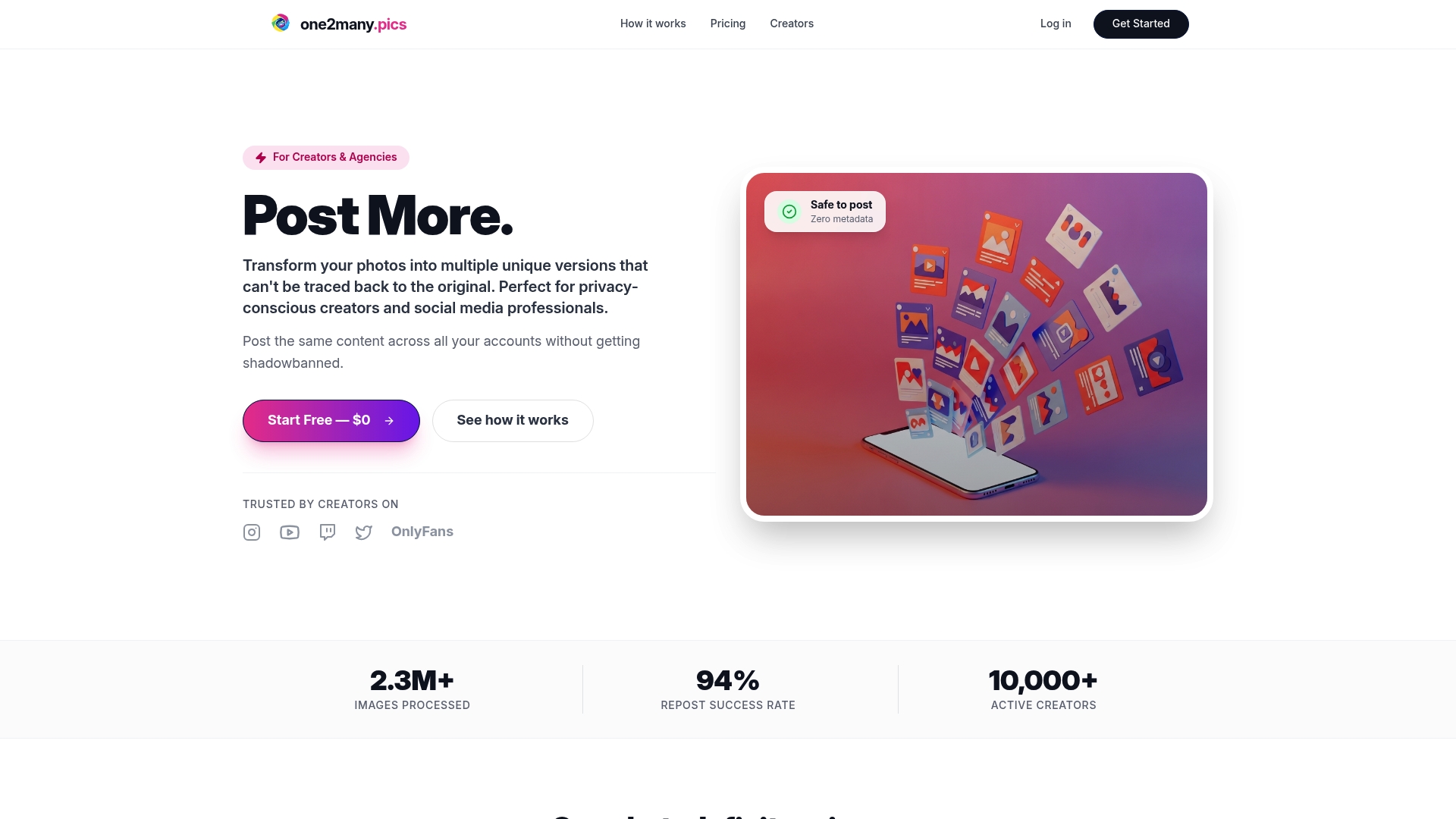
The platform handles batch image processing, metadata removal, and customizable variation settings in a single workflow. Agencies use it to generate platform-specific variants from approved master assets, apply controlled visual changes that avoid duplicate detection, and export in the formats each platform requires. For teams managing multiple client accounts across Instagram, LinkedIn, and Meta, One2many removes the manual steps that slow down creative production and create version control problems. If you are ready to scale creative output without the chaos, start with One2many and see how structured variation changes your production velocity.
FAQ
What is image variation for agencies in simple terms?
Image variation for agencies is the process of creating multiple versions of one core visual by changing specific elements like color, crop, or style. The goal is to test which version performs best on social platforms without rebuilding creative assets from scratch.
How many image variants should an agency produce per campaign?
Agencies using AI-assisted workflows typically generate 50 to 200 or more variants per client monthly. The right number depends on the campaign budget, the number of platforms, and the testing hypotheses defined in the brief.
What is the difference between light and strong image variations?
Light variations make minor adjustments such as color shifts or cropping and stay close to the master asset. Strong variations introduce major changes like a new art style or visual metaphor and require full brand review before deployment.
How does image variation improve social media ad performance?
Systematic A/B testing of image variants reveals 10 to 30% differences in click-through rates, giving agencies data to identify the highest-performing creative. Running multiple variants simultaneously gives platform algorithms more material to optimize against.
What tools do agencies use to generate image variations at scale?
Agencies use Midjourney for stylistic exploration, the OpenAI Image Variations API for prompt-free stylistic spin-offs, and template-based systems for locked-brand light variations. AI image agents connect these tools into a single pipeline with approval tracking and batch export.