

You post something you spent hours creating, and it gets 12 impressions. Meanwhile, a low-effort meme from a competitor explodes. The frustration is real, and you are not imagining it. Understanding why platforms suppress posts, technically known as algorithmic down-ranking or content throttling, is one of the most practical things a creator or marketer can do in 2026. The reasons are rarely about punishing you personally. They are about platform economics, user retention, and machine learning systems making probabilistic decisions about what people want to see.
Table of Contents
- Key Takeaways
- Why platforms suppress posts: the algorithm logic
- The external link penalty
- When automation gets it wrong
- How account reputation shapes every post
- Practical tactics to recover and protect your reach
- My honest take on platform suppression
- Protect your content visibility with One2many
- FAQ
Key Takeaways
| Point | Details |
|---|---|
| Algorithms drive suppression | Platforms use machine learning to rank content by predicted engagement, not just policy compliance. |
| Negative signals hit hard | User actions like muting or tapping "not interested" reduce your reach faster than most positive signals can recover it. |
| External links cost you reach | Posts with outbound links can lose 30 to 50 percent of their visibility because platforms want to keep users on-site. |
| Automated moderation misfires | AI systems regularly suppress legitimate content by misclassifying nuanced or sensitive topics. |
| Account health matters long-term | Behavioral patterns across your account influence distribution for every future post you publish. |
Why platforms suppress posts: the algorithm logic
The most important thing to understand about post suppression is that platforms are not primarily trying to censor ideas. They are trying to maximize the time users spend inside the app. Every ranking decision flows from that goal.
Platforms use complex machine learning models that weigh your post against dozens of user-specific signals. The system does not ask "is this content good?" It asks "will this specific user engage positively with this content right now?" Those are very different questions, and the distinction explains a lot of the seemingly random reach variation you experience.
Negative feedback signals carry disproportionate weight in these ranking models. When a user mutes you, blocks you, or taps "not interested" on one of your posts, that action sends a strong punitive signal. It does not just affect that single post. It reduces the probability that the algorithm will serve your future content to that user, and in aggregate, it pulls down your broader distribution score.
Here is what drives the most common suppression events:
- Mutes and blocks: These are the heaviest negative signals. Even one block from an influential account can meaningfully reduce your reach within connected networks.
- "Not interested" taps: Far more common than blocks, and negative rankings can outweigh many positive signals in the final algorithmic score.
- Low dwell time: If users scroll past your content without pausing, the algorithm reads that as a weak match, regardless of your follower count.
- No meaningful interaction: Posts that generate only passive views without replies, saves, or shares get down-ranked progressively over their lifespan.
Pro Tip: Create your first few posts each week specifically to spark replies, not just likes. A reply indicates far higher engagement value to ranking models than a double-tap.
The external link penalty
This one surprises a lot of creators, but the data is clear. Posting an outbound link is one of the fastest ways to reduce your reach, and it is entirely intentional on the platform's part.
When users click an external link, they leave the platform. That means fewer ad impressions, lower session time, and reduced revenue. Platforms have a direct financial incentive to suppress posts that lead users away. Posts with outbound links regularly see 30 to 50 percent less visibility compared to link-free posts. On X specifically, data from 2025 testing showed that removing links from posts produced a 1700% reach increase in some A/B tests. That number is extreme, but it reflects a real and measurable penalty.
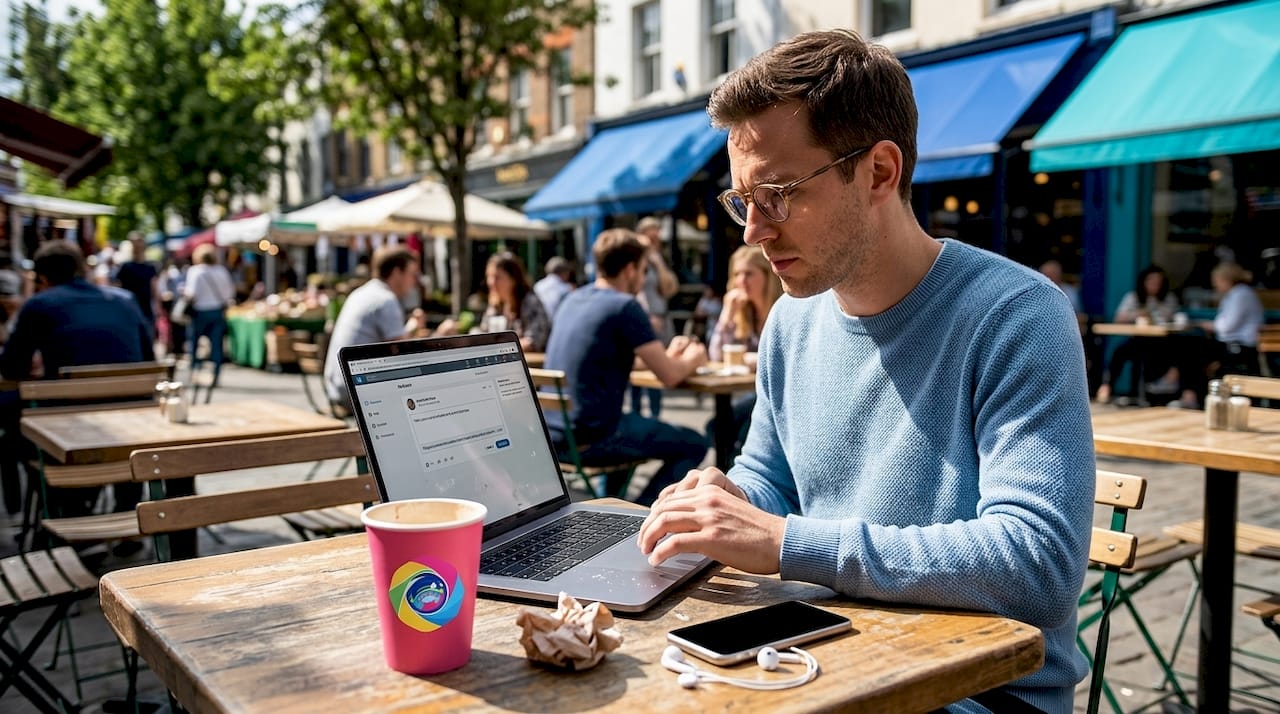
Here is how the major platforms compare on link policies:
| Platform | Link penalty severity | Best workaround |
|---|---|---|
| X (Twitter) | Very high | Post link in first reply |
| Moderate to high | Use native documents or carousels instead | |
| High | Post links in comments, not captions | |
| Very high (feed) | Bio link only; use link sticker in Stories | |
| TikTok | Moderate | Use bio link; avoid captions with URLs |
Understanding link-related down-ranking is not just tactical trivia. It should change how you structure every post that needs to drive traffic.
Pro Tip: Post your article or product link as the first reply to your own post. Then reference it in your caption with "link in comments." You get the traffic without absorbing the full algorithmic penalty.
When automation gets it wrong
Not all content suppression happens because a platform is protecting its ad revenue. A significant portion happens because automated moderation systems misclassify content at scale and have no reliable way to recognize nuance, satire, or evolving cultural context.
This is the version of post suppression that creators find most infuriating, because the content is completely legitimate and the restriction feels arbitrary. Women's health educators, for example, have repeatedly seen their posts flagged or restricted because automated systems classify health content as adult material, limiting reach significantly and in some cases causing real harm by blocking access to accurate medical information.
The deeper problem is structural. Platforms moderate billions of posts per day, and human review at that scale is impossible. So the systems make probabilistic decisions. They err on the side of caution with anything that pattern-matches to sensitive categories, even when the actual content is educational or clearly in the public interest.
"Algorithmic moderation systems optimize for avoiding the worst outcomes at scale, not for getting every individual decision right. That trade-off is invisible to creators, but it shapes their reach every single day."
Shadowbanning sits in this same category. It is the practice of reducing a post's distribution without notifying the creator, so you continue posting without realizing your content is reaching almost no one. The impact on reach and creator awareness can go undetected for weeks, especially for accounts in health, politics, or any topic that touches on content moderation edge cases.
How account reputation shapes every post
Here is something many creators miss entirely. Suppression is not always about the post. Sometimes it is about the account.
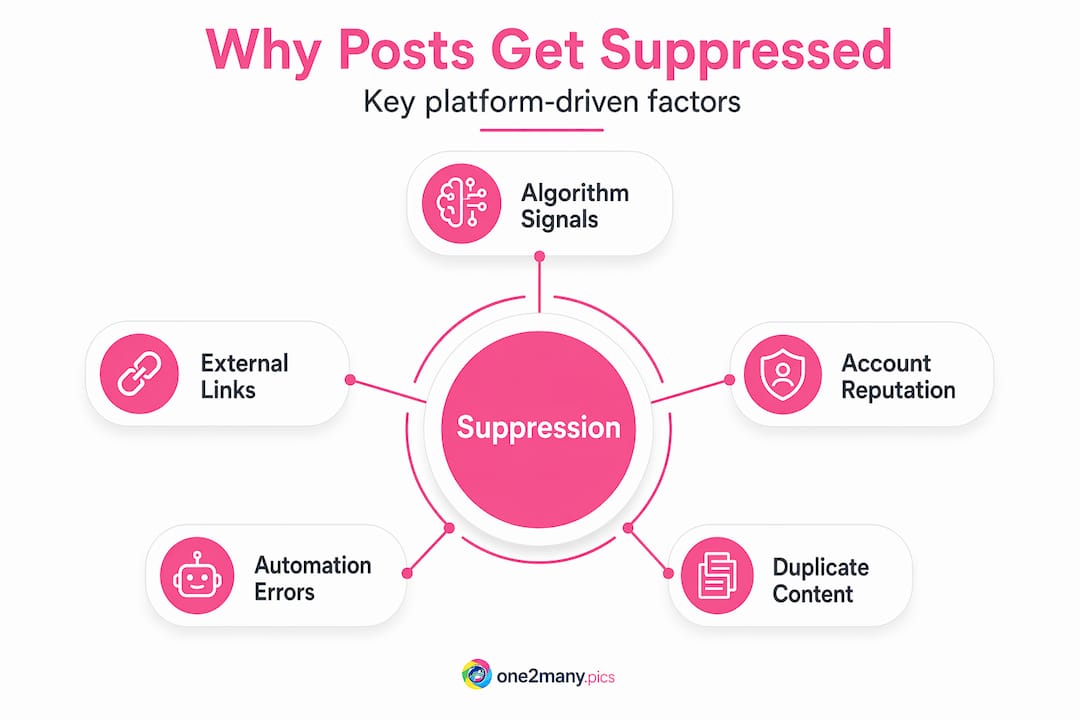
Platforms run continuous behavioral risk assessments at the account level, and those assessments influence how every post you publish gets distributed. Meta uses behavioral signals to throttle delivery well before any specific policy violation appears, flagging accounts that show patterns associated with spam, coordinated inauthentic behavior, or aggressive scaling.
The factors that trigger account-level suppression include:
- Rapid follow/unfollow cycles. This pattern closely mimics bot behavior and gets flagged fast.
- Posting frequency spikes. Going from 2 posts per day to 40 over a weekend looks like an automated account to the system.
- Cross-posting identical content. Duplicate detection algorithms treat repeated identical images or copy as spam, reducing distribution across all of your posts.
- Low account completion. Incomplete profiles, no verified email, and no profile photo lower your baseline trust score before you publish a single word.
- Mass tagging or DM campaigns. These behaviors trigger spam filters that affect organic reach, not just direct message delivery.
Recovering from account-level penalties takes time. Rehydrating algorithm trust after a suppression event requires consistent, authentic posting behavior over weeks. There is no quick fix, and trying to accelerate recovery by over-posting typically makes it worse.
Practical tactics to recover and protect your reach
Knowing the reasons for post suppression is only useful if it changes what you do. Here are the strategies that actually move the needle, based on how these systems operate.
Restructure how you share links. Stop putting URLs in the body of your posts. Move them to your first comment, your bio, or a native document upload. This applies across almost every major platform and has an immediate effect on distribution.
Prioritize replies over passive engagement. The factors affecting post visibility weight conversations much more heavily than likes or shares. Ask specific questions at the end of posts. Respond to every comment in the first hour after publishing. That early engagement window is when the algorithm decides whether to amplify your content.
Diversify your content formats. Platforms favor native formats because they keep users inside the app. A carousel on LinkedIn, a Reel on Instagram, or a native video on TikTok will almost always outperform a link post or a text-only update. Use the platform's preferred formats, not just what is easiest to produce.
Monitor for suppression before assuming it. Social media reach metrics can be misleading. A drop in impressions could reflect a reporting window change, a shift in attribution models, or an actual algorithmic throttle. Before you overhaul your strategy, check whether the drop is consistent across multiple post types and time periods. Measurement artifacts regularly mimic suppression.
Protect your image metadata. Duplicate content flags are a common and underappreciated reason why content is restricted. When you post the same or similar images across multiple accounts or platforms, automated systems can detect the duplication and reduce distribution. Stripping metadata and creating distinct visual variations of your images before posting reduces this risk significantly.
Pro Tip: Use platform analytics to identify which posts generated the most replies, not just the most reach. Build a content template based on those posts, because the algorithm will reward the same behavioral signals again.
My honest take on platform suppression
I've spent years watching creators exhaust themselves chasing algorithmic favor, and the most common mistake I see is treating suppression like a problem to defeat rather than a system to understand. Platforms are not your adversaries. They are businesses with specific optimization goals, and when you understand those goals, you can align your content with them instead of fighting them.
What I've found is that suppression is rarely absolute. It's layered. A post might have reduced reach because of one link, a few muted accounts in your audience, and a slight engagement dip from the previous week. Each factor alone would be minor. Combined, they create the frustrating wall of silence that makes creators feel invisible.
The most durable strategy I've seen is prioritizing genuine relationships within a niche over broad reach. An account with 2,000 highly engaged followers in a specific industry will consistently outperform a 50,000-follower account with a disengaged audience on almost every algorithmic measure. The algorithm is not fooled by vanity metrics, and neither are advertisers.
My take: stop trying to game the algorithm and start trying to satisfy the same thing the algorithm is trying to satisfy. Give your specific audience content they actually want. Do that consistently, protect your account reputation, and the suppression problem largely takes care of itself.
— one2many.pics
Protect your content visibility with One2many
If you've identified that duplicate detection or metadata-based content flags are hurting your reach, One2many is built specifically to solve that problem.
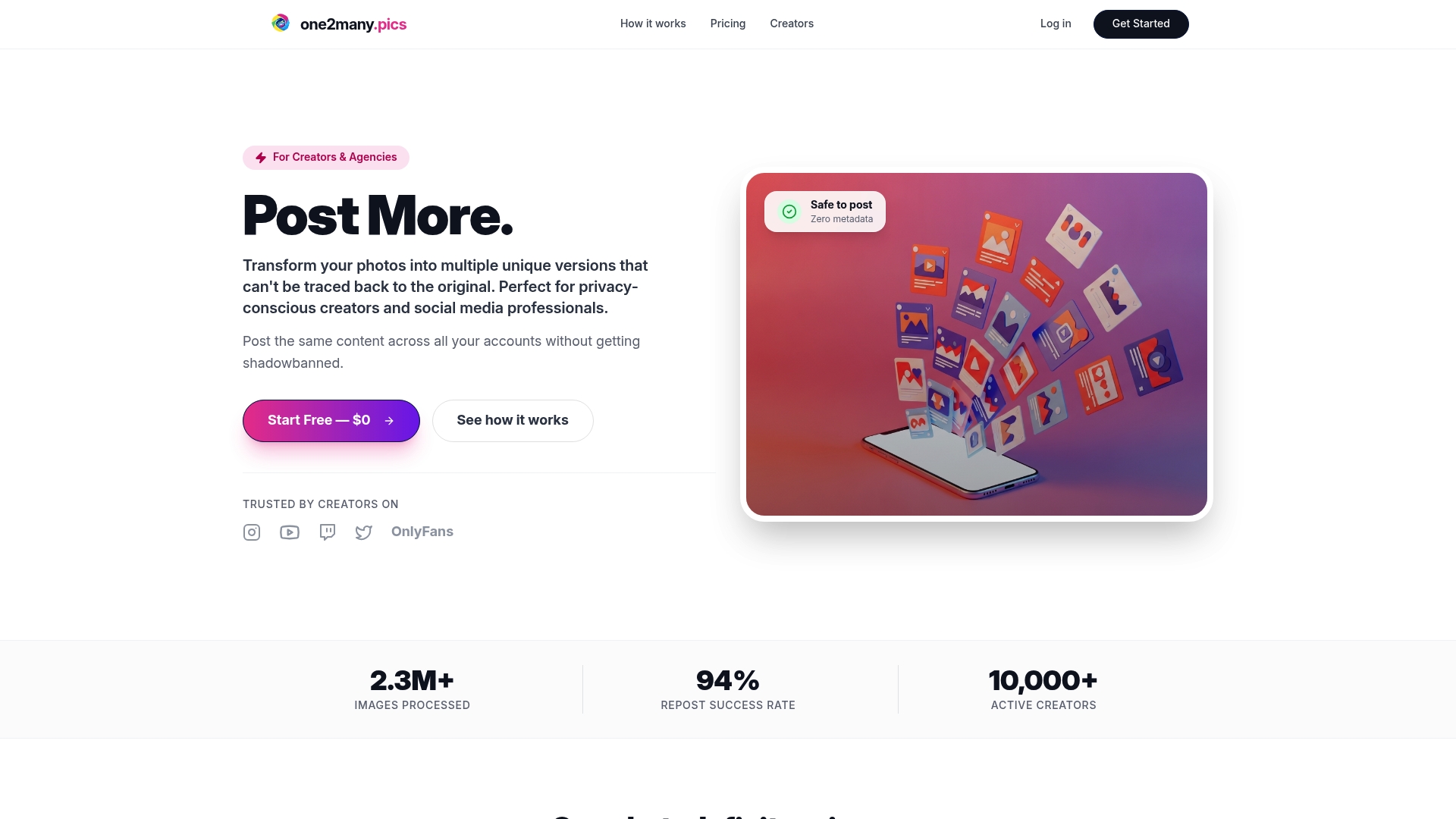
One2many removes identifying metadata from your images, including location data, device information, and timestamps, and generates unique visual variations so each post you publish looks original to platform detection systems. If you manage multiple accounts or need to protect your reach across platforms without triggering duplication penalties, the platform handles that at scale. Whether you are a solo creator posting across two accounts or an agency running dozens, One2many gives you tools to prevent social media penalties before they start, not just respond to them after the fact.
FAQ
What does it mean when a platform suppresses your post?
Post suppression means the platform's algorithm reduces the distribution of your content, limiting how many users see it. It can happen without any policy violation and without notifying the creator.
Does posting external links always hurt your reach?
On most major platforms, yes. Link posts on X have near-zero median engagement since 2025, and other platforms apply similar penalties. Posting links in replies instead of captions is the most widely effective workaround.
Can an account recover from suppression?
Yes, but it takes time. Algorithm trust rebuilds through consistent, authentic posting behavior over several weeks. Rapid or erratic posting to compensate typically extends the suppression period.
Why is my legitimate content being restricted?
Automated moderation systems regularly misclassify nuanced content, particularly in health, politics, and satire. Your content may be flagged by automated systems that cannot distinguish context, not because a human reviewer made a judgment call.
How do I know if I'm actually shadowbanned?
Check your post's reach data against your baseline. If impressions dropped sharply but engagement rate held steady, that suggests algorithmic throttling rather than an audience issue. You can also search for your account from a logged-out browser or a different account to see whether your posts appear.