

Privacy tools are the software systems agencies use to protect client data, manage consent, and maintain compliance with regulations like GDPR and CCPA. Without them, agencies operating as data processors face legal liability, contract loss, and campaign failures that no amount of creative work can fix. The question of why agencies need privacy tools has a direct answer: because client data is a legal responsibility, not just an operational asset. Consent management platforms, Data Processing Addendums (DPAs), and automated tag auditing are no longer optional features. They are the infrastructure that keeps agency relationships intact and campaigns running cleanly.
Why agencies need privacy tools to stay compliant and keep clients
Agencies act as data processors under GDPR and CCPA, which means they carry legal obligations that go far beyond their clients' own compliance duties. Failing to implement privacy controls risks losing client contracts because clients now evaluate safety alongside marketing performance. That shift in client expectations has made privacy compliance a core service requirement, not a background task.
The legal framework is specific. GDPR requires agencies to sign Data Processing Addendums with every client whose data they handle. CCPA imposes similar contractual obligations for California residents' data. Agencies are also legally responsible for signing DPAs with their own sub-processors, meaning every analytics vendor, ad platform, and CRM tool in the stack needs a signed agreement. Relying on a vendor's public terms of service does not satisfy this requirement.
Modern consent management platforms address these obligations directly. They automate consent collection, log user preferences, and generate audit trails that hold up during regulatory reviews. Without this automation, agencies spend unbillable hours manually tracking consent states across dozens of client accounts. That time cost compounds fast across a multi-client book of business.
- DPA coverage: Every client relationship and every sub-processor in your stack needs a signed Data Processing Addendum.
- Consent logging: Platforms must record when, how, and for what purpose a user gave consent, not just whether they clicked "accept."
- Audit trails: Regulators expect documented proof of compliance, not verbal assurances.
- Cross-border transfers: Data moving between countries requires specific safeguards that generic privacy policies rarely address.
- Sub-processor declarations: Your privacy policy must explicitly name the tools you use to process client data.
Pro Tip: Before onboarding any new analytics or ad tech vendor, run a DPA checklist. Confirm the vendor offers a signed agreement, not just a link to their privacy policy page.
How privacy tools reduce the real operational cost of compliance
Reactive privacy management incurs high unbillable costs. When a consent issue surfaces mid-campaign, the agency scrambles to audit tags, notify clients, and patch configurations. That firefighting pulls senior staff off billable work and damages client confidence at the same time.

Privacy regulations now cover more than 160 countries. That scale makes generic compliance templates useless for agencies managing sub-processor chains across multiple markets. A systematic, tool-driven approach replaces ad hoc responses with repeatable processes that scale across your entire client roster.
The operational gains from privacy tools fall into four clear areas:
- Automated cookie scanning: Tools that continuously scan client websites catch new tracking tags before they fire without consent. Manual audits catch problems after the fact. Automated scanning catches them before they become violations.
- Tag auditing: Continuous tag auditing aligns every tracking pixel with the user's actual consent state. Misaligned tags are the most common source of consent breaches in agency-managed campaigns.
- First-party data infrastructure: Privacy tools help agencies build consent-based first-party data assets that remain usable as third-party cookies disappear. This is a durable investment, not a short-term fix.
- Workflow integration: Privacy controls embedded into campaign setup workflows prevent errors at the source. Agencies that manage social media content workflows for privacy report fewer compliance incidents because the checks happen before content goes live.
Pro Tip: Treat your privacy tool stack the same way you treat your project management software. It should be part of every client onboarding checklist, not something you add after a problem appears.
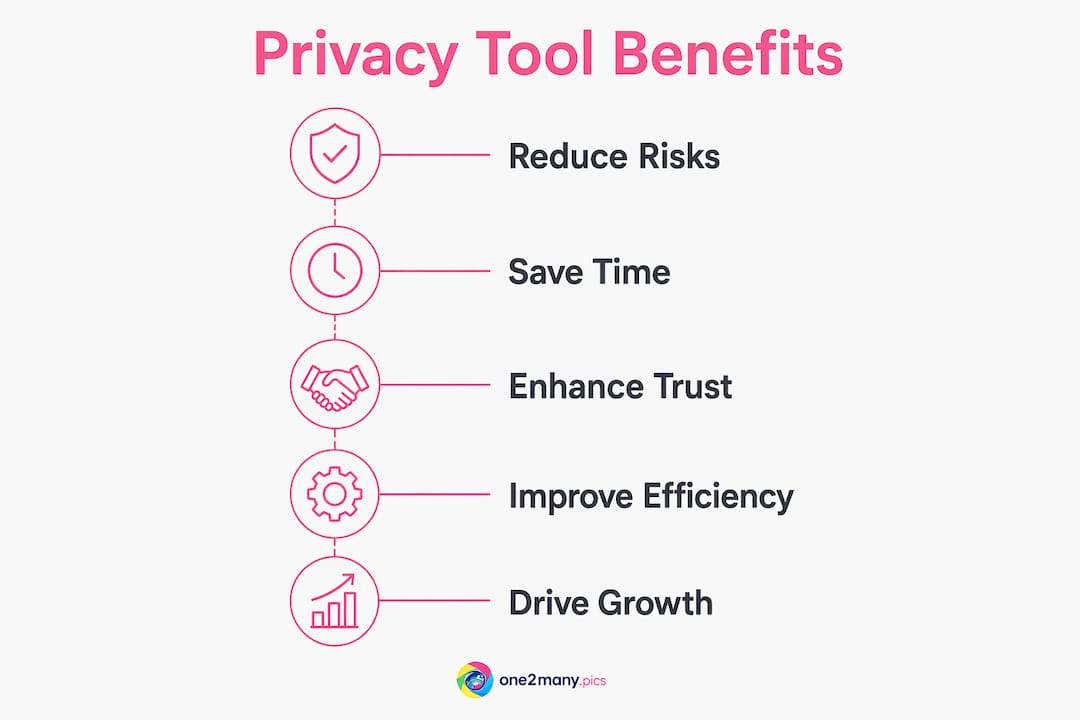
The operational efficiency gains from systematic privacy adoption are measurable. Agencies that build privacy into their standard operating procedures spend less time on reactive fixes and more time on work that generates revenue.
What happens when agencies operate without adequate privacy tools
The most common agency privacy failures are not dramatic breaches. They are quiet misconfigurations that accumulate into serious liability.
Shared project environments without granular permissions create the first major risk. When multiple team members access client data in the same workspace, a single misconfigured permission can expose one client's data to another client's account. Multi-tenant data isolation at the database level prevents this. UI-level hiding, such as simply not displaying certain data in a dashboard, does not. Regulators treat UI-level hiding as insufficient security, and it fails standard data audits.
Shadow AI usage creates the second major risk. Pasting client data into public AI tools risks significant IP violations regardless of whether a data leak actually occurs. The act of inputting confidential client information into an unauthorized large language model breaches most client confidentiality agreements instantly. Agencies must establish clear policies that forbid this practice and use only approved, privacy-compliant AI services.
- Misconfigured consent banners: A consent banner that fires after tracking scripts load is legally equivalent to no consent at all.
- Generic privacy policies: Policies without explicit sub-processor declarations and AI data usage clauses expose agencies to compliance violations even when their intentions are good.
- Cross-border transfer gaps: Moving client data across jurisdictions without Standard Contractual Clauses or equivalent safeguards is a direct GDPR violation.
- Vendor assumption errors: Assuming a vendor's compliance covers your agency's obligations is the most expensive mistake agencies make.
Agencies managing complex multi-client data relationships face multiplied compliance risks from minor misconfigurations. One error in a shared environment does not stay contained. It spreads across every client whose data touches that environment.
How privacy tools protect marketing performance and client trust
Poor consent management leads directly to broken attribution, shrinking retargeting audiences, and increased customer acquisition costs. Campaign dashboards already show the damage when privacy-first marketing is handled poorly. The performance impact is not theoretical. It shows up in cost-per-click, return on ad spend, and audience size metrics within weeks of a consent failure.
Privacy tools prevent tracking tag misfires by ensuring scripts only fire for users who have given valid consent. This keeps attribution data clean and retargeting pools accurate. Agencies that maintain consent-aligned data collection deliver more reliable campaign reporting, which is itself a competitive advantage.
Clients now buy safety as well as performance. Privacy is a strategic service component distinct from pure marketing metrics, and it strengthens client-agency relationships in ways that campaign results alone cannot. An agency that proactively demonstrates privacy compliance gives clients one less reason to look elsewhere.
| Privacy tool function | Direct marketing benefit |
|---|---|
| Consent management | Clean attribution data and accurate audience segmentation |
| Tag auditing | Prevents pixel misfires that inflate or deflate campaign metrics |
| First-party data collection | Durable audience assets independent of third-party cookies |
| DPA management | Reduces legal risk that triggers client contract reviews |
| Data isolation | Prevents cross-client contamination that damages reporting integrity |
The role of privacy in content marketing extends beyond legal protection. Agencies that embed privacy into their service model position it as a differentiator. Clients who understand the value of privacy compliance become stickier, longer-term partners. That retention effect compounds over time in ways that pure performance metrics never capture.
Key Takeaways
Agencies that treat privacy tools as core infrastructure, not compliance overhead, protect their clients, their contracts, and their campaign performance simultaneously.
| Point | Details |
|---|---|
| Legal obligations are non-negotiable | Agencies must sign DPAs with clients and sub-processors under GDPR and CCPA. |
| Automation reduces unbillable costs | Automated cookie scanning and tag auditing replace reactive firefighting with repeatable processes. |
| Shadow AI is a hidden liability | Inputting client data into unauthorized AI tools breaches confidentiality agreements instantly. |
| Consent failures hurt campaign metrics | Poor consent management breaks attribution, shrinks audiences, and raises acquisition costs. |
| Privacy builds client retention | Clients who value safety as a service component stay longer than those who only measure performance. |
Privacy tools are a business decision, not just a compliance checkbox
The agencies I see struggling most with privacy are not the ones that ignored it entirely. They are the ones that treated it as a one-time setup task. They installed a consent banner, filed it away, and moved on. Then regulations updated, new tracking tools entered their stack, and their "compliant" setup became a liability overnight.
Effective privacy requires a layered, intentional approach beyond relying on a single tool. Culture and tool vetting matter as much as the software itself. An agency can have the best consent management platform on the market and still fail a GDPR audit because one team member pasted client data into an unapproved AI chatbot. The tool did not fail. The culture did.
The agencies that get this right treat privacy the same way they treat financial controls. They assign ownership, build checklists, run regular audits, and vet every new vendor before it touches client data. They also recognize that privacy tips for digital creators and agency-level compliance share the same foundation: intentional data handling at every step of the workflow.
The market opportunity here is real. Most agencies are still in reactive mode. The ones that build privacy into their standard operating procedures now will have a genuine advantage when clients start asking harder questions, and they will. The agencies that can answer those questions with documented processes and signed DPAs will win contracts that others lose.
— one2many.pics
Privacy tools built for agencies managing visual content at scale
Agencies managing visual content across multiple accounts face a specific privacy challenge that standard compliance tools do not address: image metadata. Every photo carries embedded data including location, device information, and timestamps. That data creates a digital footprint that can expose client identities, reveal posting patterns, and trigger platform penalties.
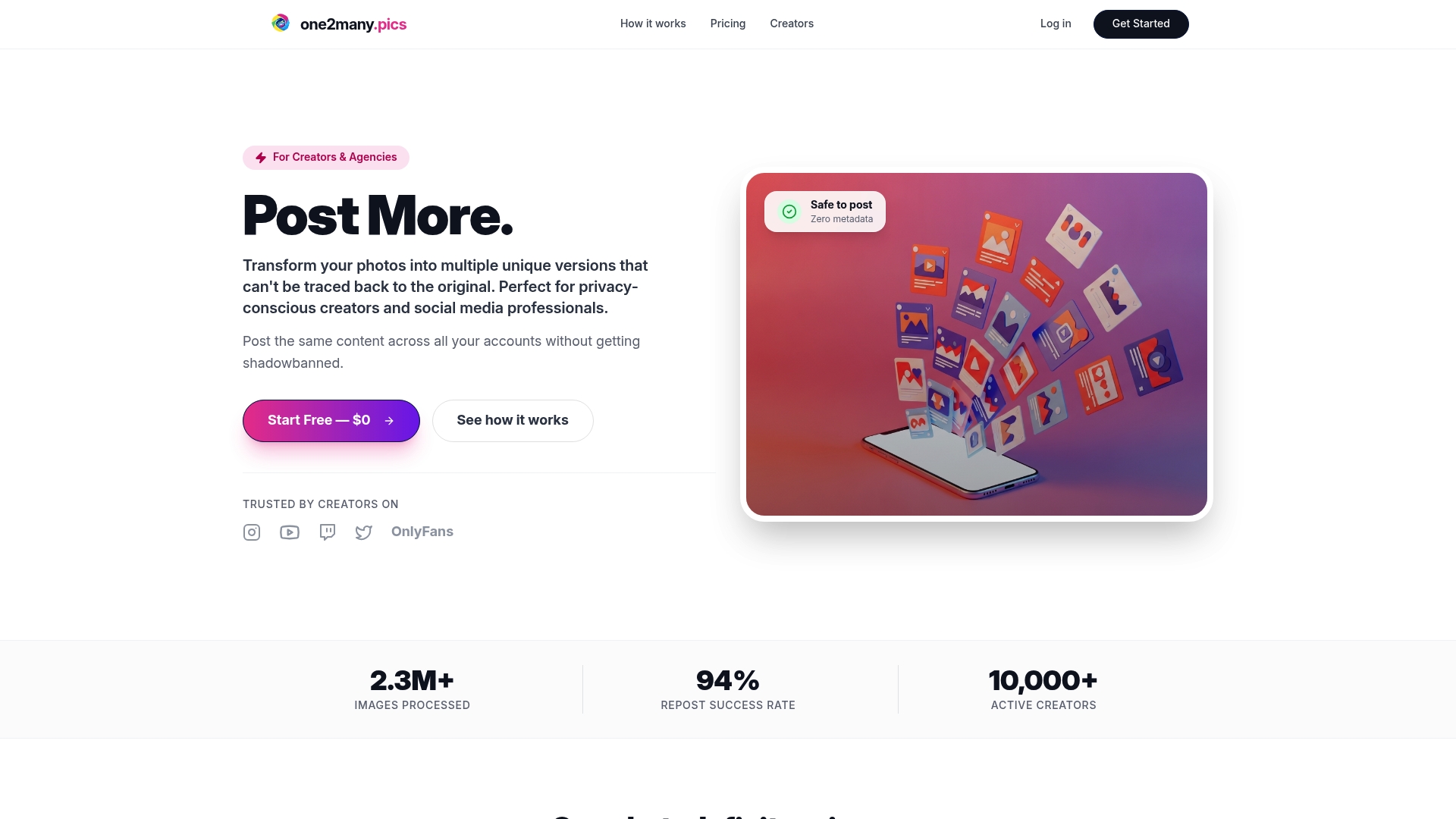
One2many is built for exactly this problem. The platform strips image metadata, generates unique visual variations, and lets agencies post across multiple accounts without leaving a traceable footprint. For agencies managing social media campaigns at scale, that protection is as important as any consent management platform. One2many's privacy tools for agencies support bulk processing, workflow integrations, and secure downloads, making it practical for teams managing dozens of client accounts simultaneously. The 2026 privacy checklist for marketers pairs directly with One2many's features for agencies building a complete privacy-first workflow.
FAQ
What are privacy tools for agencies?
Privacy tools are software systems that help agencies manage consent, protect client data, and maintain compliance with regulations like GDPR and CCPA. They include consent management platforms, tag auditing tools, DPA management systems, and data isolation infrastructure.
Why do agencies need privacy tools more than individual businesses?
Agencies manage data for multiple clients simultaneously, which multiplies compliance risk. A single misconfiguration in a shared environment can expose multiple clients' data, making layered privacy controls a necessity rather than an option.
What is a Data Processing Addendum and why does it matter?
A Data Processing Addendum is a legally binding contract that defines how an agency handles a client's personal data. Agencies must sign DPAs with every client and every sub-processor in their technology stack to satisfy GDPR and CCPA requirements.
How does poor consent management affect campaign performance?
Poor consent management breaks attribution tracking, shrinks retargeting audiences, and raises customer acquisition costs. Campaign dashboards reflect this damage within weeks of a consent failure, making it a direct performance issue, not just a legal one.
What is shadow AI and why is it a privacy risk for agencies?
Shadow AI refers to team members using public AI tools, such as unauthorized large language models, without organizational approval. Pasting client data into these tools breaches confidentiality agreements instantly, regardless of whether a data leak actually occurs.