

Picture this: you're managing ten brand accounts across three platforms, posting similar visual content to each one, all from the same laptop. Within a week, two accounts get shadowbanned, one gets locked out, and a client is calling you demanding answers. This scenario plays out for agencies and creators every single day, and the root cause is almost never the content itself. It's the workflow behind it. A well-designed social media content workflow doesn't just save time; it keeps every account safe, private, and performing at its best.
Table of Contents
- Common challenges in multi-account social media management
- Step-by-step: Proven social media content workflow for agencies
- Privacy and penalty avoidance: Workflow defenses that work
- Ensuring compliance: Tools and features that safeguard your workflow
- Troubleshooting and measuring your workflow's impact
- Why fast workflows fail (and what actually works in 2026))
- Ready to optimize your content workflow — and protect every account?
- Frequently asked questions
Key Takeaways
| Point | Details |
|---|---|
| Account isolation is essential | Separate browser profiles and IPs are critical for managing multi-brand accounts without risking penalties. |
| Standardized workflow increases efficiency | A batching, review, approval, and scheduling process triples output and slashes creation time by half. |
| Compliance features safeguard brands | Approval workflows, risk screening, and real-time monitoring help agencies meet legal and platform rules before posting. |
| Privacy drives engagement | Enhanced privacy workflows directly lead to higher engagement rates and platform reach. |
| Careful tool selection matters | Choose tools with proven compliance and privacy features to maximize workflow ROI and safety. |
Common challenges in multi-account social media management
Managing multiple accounts is harder than it looks from the outside. The visible work is scheduling and posting. The invisible work is keeping each account isolated, secure, and compliant with platform rules that change constantly.
The most common issues agencies hit include:
- Account lockouts triggered when a platform detects unusual login patterns
- Shadowbanning caused by duplicate content or suspicious metadata
- Sudden engagement drops linked to overlapping IP addresses or device fingerprints
- Unclear team roles that lead to unauthorized posts or missed approvals
- Centralized login credentials stored insecurely and shared across multiple team members
The device and IP overlap problem is particularly damaging. Platforms flag shared IP/device signals as suspicious activity, because genuine separate users don't share identical environments. When your agency logs into five client accounts from one machine, the platform sees one user pretending to be five. That's a red flag.
"The moment multiple accounts share a device fingerprint, platforms treat them as one entity operating in disguise. The penalty isn't just inconvenient — it can erase months of audience-building overnight."
Client relationships take a serious hit when accounts get penalized. A reach drop on a major campaign launch or a temporary ban during a product release can cost thousands in lost revenue and damage trust that took years to build. This is why your social media security guide needs to be built into your workflow, not treated as a separate checklist you revisit after something goes wrong.
The solution starts with understanding that these problems are systemic, not random. Once you recognize the structural causes, you can build a workflow that addresses each one deliberately. A solid foundation in preventing social media penalties begins at the planning stage, not the publishing stage. Agencies that consult a thorough privacy guide for creators before launching campaigns consistently see fewer account disruptions.

Step-by-step: Proven social media content workflow for agencies
A reliable workflow removes ambiguity. Every team member knows their role, every asset goes through the right checkpoints, and nothing gets published without meeting your standards. Here's what a battle-tested workflow looks like in practice.
The standard workflow for agencies follows these six core stages:
- Content batching. Create a week's or month's worth of content in concentrated sessions. Batching reduces context switching and keeps messaging consistent across accounts.
- Internal review. A senior team member checks every asset for brand alignment, quality, and compliance before it ever reaches the client.
- Client approval. Clients review a staged draft. Using a shared approval portal removes email back-and-forth and creates an audit trail.
- Revisions. Agreed changes get made in one pass. Set a firm revision limit in your client contract to prevent endless loops.
- Scheduling. Approved content goes into your scheduling tool with platform-specific formatting applied. Captions, hashtags, and image specs get adjusted per account.
- Publishing and reporting. Content goes live and performance data gets captured automatically. Weekly reports keep clients informed without manual data gathering.
| Workflow stage | Without optimization | With optimization |
|---|---|---|
| Content batching | Ad hoc, reactive | Planned, batched monthly |
| Review cycles | 3+ rounds, lengthy | 1-2 rounds, time-boxed |
| Client approval | Email chains, no audit | Portal-based, traceable |
| Scheduling | Manual, inconsistent | Automated, platform-specific |
| Reporting | Manual data pull | Auto-generated dashboards |
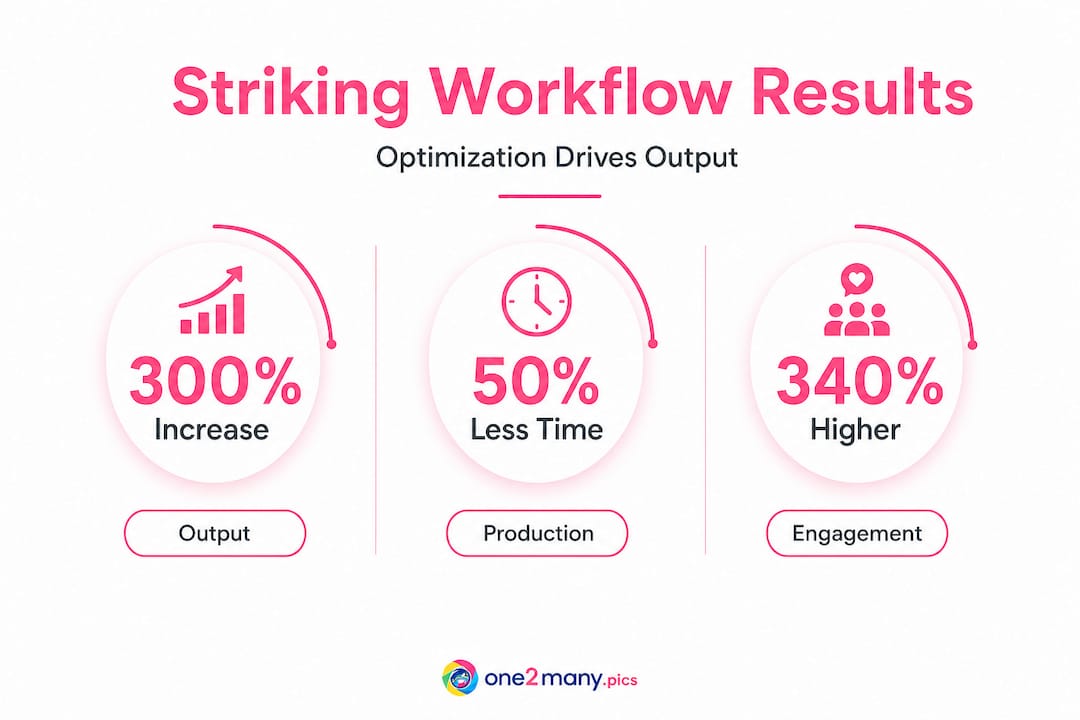
The numbers behind optimized workflows are striking. Streamlined workflows produce a 300% increase in output, cut production time by 50%, and improve content quality scores by 67%. On top of that, integrating AI tools saves individual team members 8 to 12 hours per week. That's a full day and a half returned to your team every single week.
Pro Tip: Batch your image resizing and metadata cleaning in the same session as your content creation. Combining these tasks prevents the "almost published" trap where assets are ready but not yet privacy-proofed.
Following posting best practices during the scheduling stage, rather than treating them as an afterthought, dramatically reduces the chance of publishing errors. And paying attention to visual content choices during the batching phase ensures your assets are built for engagement from the start.
Privacy and penalty avoidance: Workflow defenses that work
Here's where many agencies lose the gains they worked hard to build. You can have a perfect six-stage workflow and still get penalized if your privacy layer is missing. Platform algorithms are designed to detect patterns, and identical metadata across multiple accounts is one of the clearest patterns they look for.
Practical privacy defenses to embed in your workflow include:
- Separate browser profiles for each client account, each with unique fingerprint settings
- Dedicated IP addresses per account or account group, using proxies or VPNs with consistent assignment
- Metadata removal from every image before uploading, stripping location data, device info, and timestamps
- Image variation generation to ensure that the same core visual doesn't get flagged as duplicate content across accounts
- Role-based access controls so team members only log into accounts they're actively managing
Using separate virtual environments per client, each with unique IPs and browser fingerprints, is the technical foundation of account isolation. This approach mimics the behavior of genuinely separate users, which is exactly what platforms expect to see.
| Privacy layer | Risk without it | Benefit when applied |
|---|---|---|
| Separate browser profiles | Account linking, flagging | Platform sees independent users |
| Unique IP per account | IP-based shadowban | No cross-account footprint |
| Metadata removal from images | Device/location exposure | No trackable digital fingerprint |
| Image variation | Duplicate content detection | Unique asset per account |
The connection between privacy and engagement is direct and often overlooked. When accounts get shadowbanned or suppressed, reach drops even when the content quality is high. TikTok's median engagement rate is 27.6%, and Instagram Reels and Carousels deliver 44% higher engagement than static images. But those numbers only apply to accounts that are visible. A suppressed account with great content still performs poorly.
Pro Tip: Run a fingerprint audit on your browser setup before onboarding a new client. Tools that check your browser's exposed fingerprint can confirm whether your virtual environment is genuinely isolated.
Understanding how social media fingerprints work helps you make smarter infrastructure decisions across your whole team. Pair that with solid image privacy practices and you're covering both the network layer and the content layer. Agencies that have moved to privacy-focused platforms for image processing report significantly fewer content suppression incidents.
Ensuring compliance: Tools and features that safeguard your workflow
A workflow that bypasses compliance is a liability. Every industry has rules: financial services have disclosure requirements, healthcare has privacy regulations, and every platform has its own community standards. Getting a post live fast is worthless if it triggers a legal issue or gets the account suspended.
Key compliance features to look for in any workflow tool include:
- Approval workflows that require sign-off before publishing
- Content risk screening that flags potentially problematic language or claims
- Archiving capabilities that store every post and approval for audit purposes
- Real-time monitoring for brand mentions and regulatory triggers
- Role-based access that ensures only authorized users can approve or publish
Hootsuite's approval workflows actively flag violations and prevent non-compliant posts from going live. This isn't just a convenience feature. For regulated industries, it's essential protection against fines and legal action.
"Compliance isn't the enemy of creative work. It's the guardrail that keeps creative work from becoming a crisis."
AI is a powerful accelerator in compliance workflows, but it comes with a caveat. AI tools require brand-specific training and custom models to accurately capture a brand's voice. Combining AI-generated drafts with human approval at the final stage balances speed with the judgment that automation still can't fully replicate.
The smartest agencies use tiered approvals. Junior team members create and stage content. Mid-level managers do internal review and compliance checks. Senior strategists or clients handle final approval. This structure prevents bottlenecks while keeping quality control intact. Your compliance guide for creators should document every layer of this approval chain so new team members can onboard quickly without creating compliance gaps.
Troubleshooting and measuring your workflow's impact
Even a solid workflow develops weak points over time. Team turnover, platform algorithm changes, and client scope creep all create opportunities for things to slip. Regular workflow audits catch problems before they become costly.
Workflow audit checklist:
- Are all team members using isolated browser profiles for every account?
- Is metadata being stripped from images before upload?
- Are approval records being archived for every post?
- Are engagement and reach metrics being tracked per account weekly?
- Is there a documented escalation process for compliance concerns?
- Are platform-specific formatting requirements being applied at scheduling?
When you spot a bottleneck, trace it back to the stage where work stalls most often. Approval delays usually mean unclear ownership or slow client response. Engagement drops usually point to content suppression, which points back to privacy gaps. Low output usually means the batching stage isn't protected from interruptions.
For measuring impact, set benchmarks at the start, not after. Track:
- Output volume per week per team member
- Average time from content brief to published post
- Revision round count per campaign
- Account engagement rate per quarter
- Number of compliance incidents or account penalties
The results from properly optimized workflows are real and measurable. Case studies show engagement increases of 340% and reach improvements of 312% after agencies implemented structured workflow changes. These aren't outliers. They're what happens when you remove friction and close privacy gaps systematically.
Reviewing your content types and their privacy impact during the audit process often reveals quick wins. Certain asset types carry more metadata risk than others, and adjusting your creation process to account for that can produce immediate gains in account safety.
Why fast workflows fail (and what actually works in 2026)
There's a widespread belief in the agency world that faster equals better. The push for automation, AI, and rapid publishing has led many teams to strip out the review and privacy layers in the name of speed. That's a mistake that gets more expensive every year.
Platform detection systems in 2026 are significantly more sophisticated than they were even two years ago. Algorithms that once caught obvious duplicate content now detect subtle pattern similarities across accounts, including metadata signatures, posting timing patterns, and visual hash matches. A workflow built purely for speed, without isolation and variation built in, is increasingly easy for platforms to detect and penalize.
The agencies consistently outperforming their competitors aren't the fastest. They're the most deliberate. They batch efficiently, yes, but they also maintain strict account isolation, use varied image assets per account, and build human review into every approval chain. They treat smart visual content choices as part of the workflow architecture, not a design afterthought.
The uncomfortable truth is that cutting corners on privacy almost always creates a bigger cost down the road. A shadowban repair takes weeks. An account appeal process can stretch months. A lost client relationship because their launch campaign got suppressed is sometimes unrecoverable. The time you save by skipping the privacy layer is almost never worth what you risk.
Sustainable workflow gains come from building systems where every step serves both efficiency and safety. Automation handles repetitive tasks. Humans handle judgment calls. Privacy tools handle account isolation. That balance is what actually scales.
Ready to optimize your content workflow — and protect every account?
Improving your workflow is only half the equation. The other half is making sure every image you publish is clean, unique, and untraceable across your accounts.
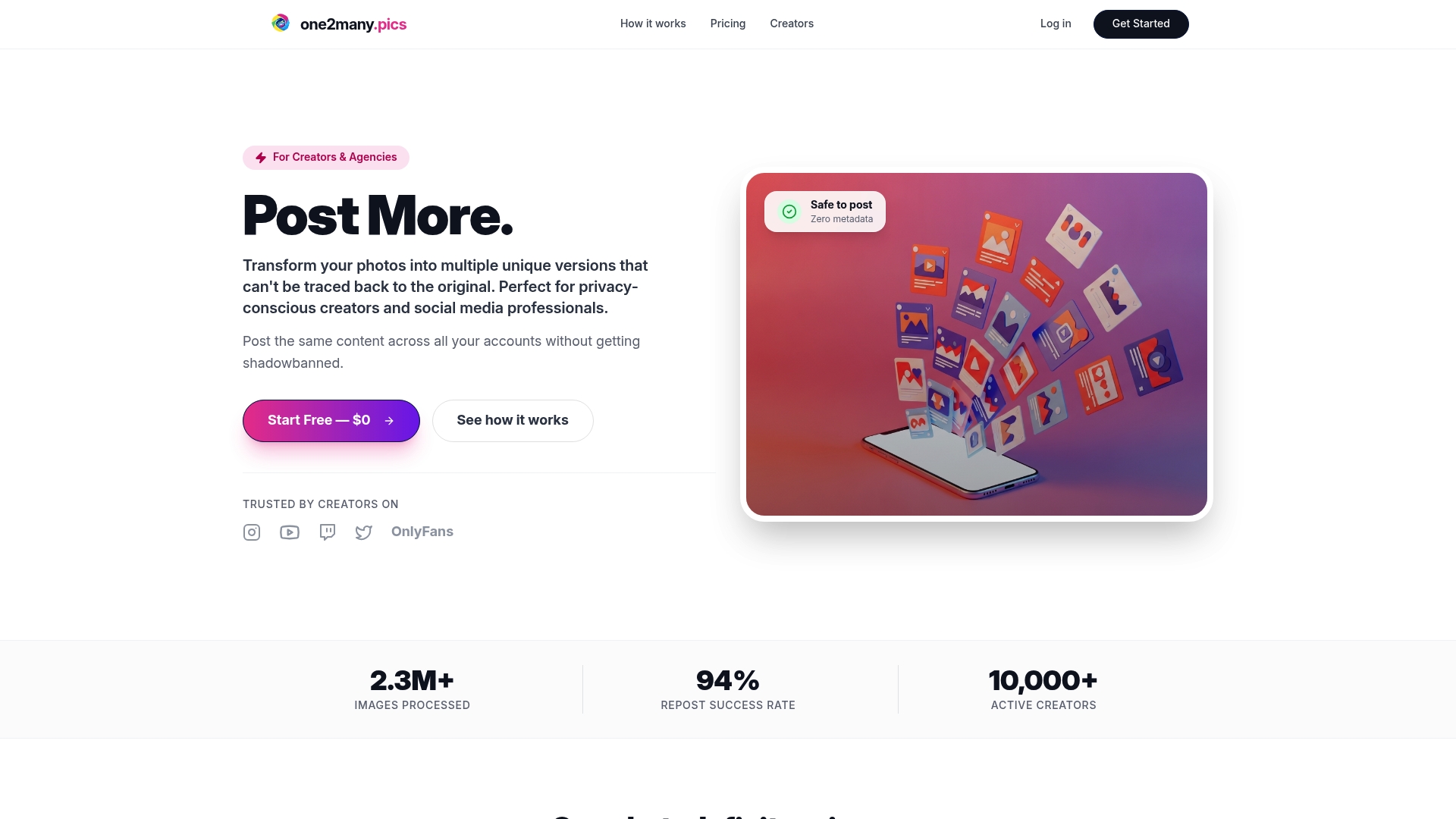
One2Many.pics was built specifically for agencies and creators managing multiple accounts who can't afford to have their content suppressed or their accounts linked. The platform strips metadata from every image, generates unique visual variations, and gives you secure, ready-to-publish assets that won't leave a detectable footprint. Whether you're managing three accounts or three hundred, you can create untraceable social images that move through your workflow cleanly and safely. Pair it with the workflow improvements in this article and you'll have a content operation that's both fast and airtight.
Frequently asked questions
What is the biggest risk when managing multiple brand accounts from one device?
The main risk is having multiple accounts linked to your IP or device, which can trigger platform penalties or bans. Platforms flag shared IP/device signals as suspicious activity because genuine separate users don't share identical digital environments.
How much time can workflow automation save for social media agencies?
Smart workflows and AI tools can cut content creation time by over 50% and save 8 to 12 hours weekly per team member. Streamlined workflows also produce a 300% increase in output and a 67% improvement in measured content quality.
What tools help ensure legal and platform compliance in content publishing?
Top platforms offer approval workflows and role-based access controls that prevent non-compliant content from going live. These features are especially critical for regulated industries where a single non-compliant post can trigger significant legal exposure.
Why does account isolation and using separate IPs matter?
Isolating each brand account with unique virtual environments and IPs mimics the behavior of separate users, minimizing penalty risks. Using unique IPs and fingerprints per account prevents platforms from linking your clients' accounts together through shared infrastructure signals.
What type of content formats see the highest engagement rates?
Video content like TikTok and Instagram Reels consistently outperforms static images in reach and interaction. TikTok's median engagement rate sits at 27.6%, while Reels and Carousels deliver 44% higher engagement than standard image posts.