

Privacy-first content creation is the practice of developing and distributing digital content with proactive measures to protect creator and audience data, reduce personal exposure, and comply with evolving privacy standards like GDPR and zero-party data principles. Creators in 2026 face real risks: 41% fear AI likeness misuse and unauthorized use of their data in AI training. That number reflects a fundamental shift in how digital identity is threatened. A privacy-conscious content creation guide is no longer optional for serious creators and marketers. It is the foundation of a sustainable, trust-based digital presence.
What tools and platforms support privacy-first content creation?
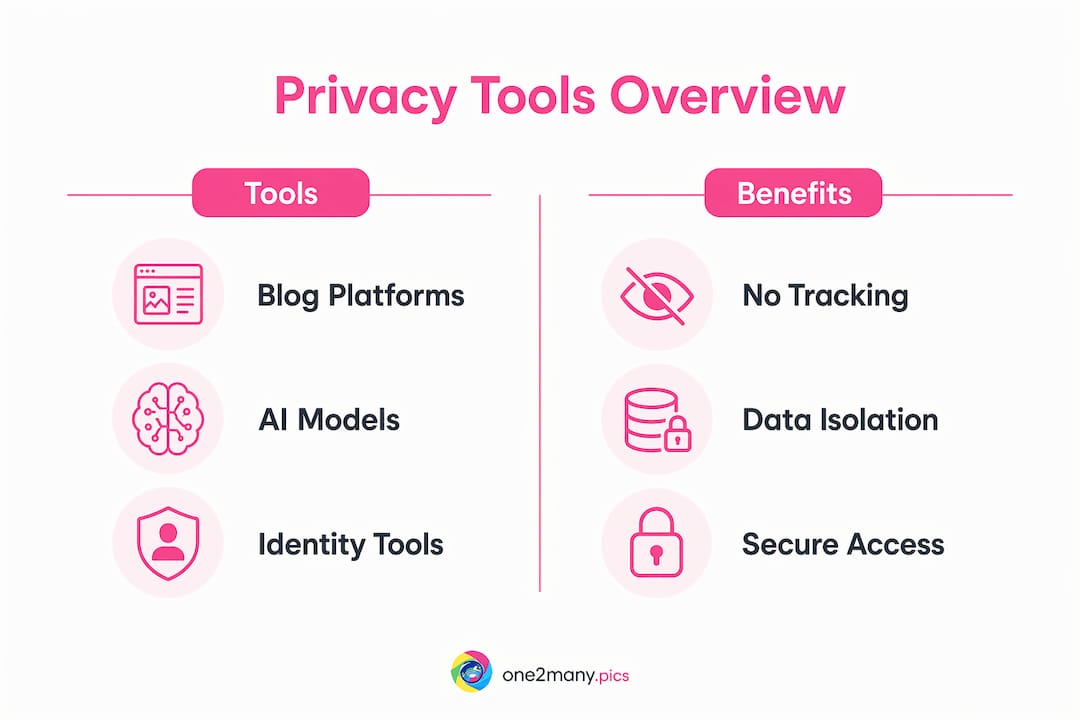
Privacy-focused platform choices are the first line of defense in any secure content development workflow. The platforms you use to write, publish, and distribute content determine how much of your data and your audience's data gets exposed by default.
Privacy-focused blogging platforms have moved to no-tracking models, eliminating cookie consent banners, improving load speed, and reducing compliance burden. That shift matters because every third-party script you remove is one fewer data leak point in your publishing stack.

For AI-assisted content work, isolated AI models that do not retain user data are the safer choice. Standard consumer AI tools often store prompts and outputs, which creates a record of your ideas, drafts, and client work. Isolated or self-hosted models prevent that exposure entirely.
Identity separation is equally critical. Dedicated accounts and password managers are the most effective defense against doxxing and stalking. Use a non-personal email address for every platform account tied to your content work. A password manager like Bitwarden or 1Password keeps those identities organized without cross-contamination.
Pro Tip: Run an AI content workflow audit before committing to any new tool. It surfaces data-sharing risks you might not catch during a standard free trial.
| Platform category | Key privacy feature | Compliance benefit |
|---|---|---|
| Privacy-focused blogging platforms | No third-party tracking scripts | Removes cookie banner requirement |
| Isolated AI writing tools | No prompt or output retention | Protects client and creator IP |
| Dedicated email accounts | Identity separation from personal use | Reduces doxxing and stalking risk |
| Password managers | Encrypted credential storage | Prevents cross-account exposure |
How to implement privacy-first strategies that minimize digital footprints
A privacy-first content strategy requires deliberate workflow steps, not just tool choices. The goal is to prevent personal data from attaching itself to your content before it ever reaches a platform.
Follow these steps to build a clean, low-footprint publishing process:
-
Separate your professional and personal identities. Create distinct accounts for every platform you use professionally. Never log into a work account from a personal device without a VPN or browser profile separation.
-
Strip metadata from every image before publishing. Removing EXIF data from images and sanitizing documents are standard privacy hygiene steps. EXIF data can contain GPS coordinates, device model, and timestamp information that reveals your location and equipment.
-
Sanitize documents and PDFs. Word processors and design tools embed author names, revision histories, and software version data into file metadata. Use a dedicated metadata removal tool before sharing any document publicly.
-
Use a staging environment before going live. Treating content pipelines like software deployments by using staging environments to audit for leaks reinforces privacy-first publishing. A staging review catches embedded tracking pixels, unauthorized scripts, and metadata before your content reaches an audience.
-
Maintain a pre-publish privacy checklist. Consistency is the hardest part of any privacy workflow. A written checklist reduces human error and keeps every team member aligned on the same standard.
Pro Tip: Tools like ExifTool (free, open-source) automate metadata removal across bulk image batches. Build it into your export step so stripping metadata becomes automatic, not optional.
One2many takes this workflow further for visual content. The platform removes location data, device info, and timestamps from images automatically, then generates unique visual variations. That process protects creators who post across multiple accounts from both metadata exposure and duplicate content detection.
How to ethically collect and use data for privacy-first marketing
Ethical data collection is the competitive advantage most marketers overlook. Privacy-first funnels shift focus from compliance burden to brand advantage by building authentic trust through transparent data use and value exchange. Audiences who trust you share better data, engage more deeply, and convert at higher rates.
Zero-party data is information your audience gives you directly and intentionally. First-party data is behavioral data you collect from your own platforms. Both are privacy-friendly because they do not rely on third-party tracking or data brokers. Progressive profiling and preference centers allow you to gather this data incrementally, building sustainable trust rather than extracting everything at once.
Gated content and interactive tools like quizzes are the most effective mechanisms for ethical data collection. A quiz that helps your audience solve a real problem earns their contact information honestly. That exchange is transparent, and the audience member understands exactly what they are sharing and why. For deeper context on trust-based data collection and how it replaces third-party cookie dependency, the transition is already well underway across the industry.
Do's and don'ts of privacy-respecting data collection:
- Do use preference centers so subscribers control what content they receive
- Do disclose exactly what data you collect and how you use it
- Do offer genuine value in exchange for any information you request
- Don't pre-check consent boxes or bury opt-outs in fine print
- Don't collect data you have no specific plan to use
- Don't share audience data with third parties without explicit consent
Verified consent and preference management enable personalization without surveillance, improving audience experience and content relevance sustainably. That is the core promise of a privacy-focused content strategy done right.
What are common privacy pitfalls in content creation?
Most privacy failures are not dramatic breaches. They are quiet, accumulated oversights that connect your identities or expose your audience without anyone noticing until the damage is done.
Link-leakage via shared metadata is one of the most common unseen risks. When you use the same Google Analytics ID, recovery email address, or ad pixel across personal and professional accounts, those shared signals link your identities. Platforms and data brokers can map that connection even if you never publicly associate the accounts.
Remastering or repurposing older content adds new metadata that may expose private information. Automated metadata scanning, redaction tools, and consent logs are the standard fix. Creators who update legacy posts without auditing them first often reintroduce data they originally removed.
Common mistakes to avoid:
- Using the same email address for personal social accounts and professional publishing platforms
- Forgetting to strip metadata from images repurposed from personal photo libraries
- Embedding third-party fonts or scripts that load external trackers without your knowledge
- Skipping consent log updates when repurposing or remastering older content
- Reusing analytics tracking codes across accounts that should remain separate
Pro Tip: Schedule a quarterly digital footprint audit to catch legacy content that predates your current privacy workflow. Old posts are the most common source of unintended exposure.
Consent management is also a live obligation, not a one-time setup. GDPR and similar regulations treat consent as a dynamic, auditable asset. If your consent records do not reflect current data practices, you are exposed to regulatory risk even if your current content is clean.
Key Takeaways
Privacy-first content creation requires stripping metadata, separating identities, collecting only consented data, and auditing content pipelines before publishing to protect both creator and audience privacy.
| Point | Details |
|---|---|
| Strip metadata before publishing | Remove EXIF data from images and sanitize documents to prevent location and device exposure. |
| Separate professional and personal identities | Use dedicated accounts and password managers to block cross-account data linking. |
| Collect only consented, zero-party data | Use preference centers and quizzes to gather audience data transparently and ethically. |
| Audit pipelines with staging environments | Review content for tracking scripts and metadata leaks before going live. |
| Audit legacy content regularly | Remastered or repurposed content can reintroduce metadata and consent gaps you already fixed. |
Why privacy-first content is a trust asset, not just a compliance task
The creators who treat privacy as a compliance checkbox are missing the bigger picture. Privacy-first practices are a trust signal, and trust is the scarcest resource in digital media right now.
Working with creators and marketers across different content verticals, the pattern is consistent: audiences who know their data is handled carefully engage more, share more, and stay longer. That is not a soft benefit. It shows up in open rates, return visit rates, and conversion numbers. The creators who built transparent data practices early now have a measurable advantage over those scrambling to retrofit consent frameworks onto extractive systems.
The AI risk dimension is real and growing. Forty-one percent of creators fear AI likeness misuse, and that fear is rational. Proactive metadata hygiene, isolated AI tools, and clear content ownership documentation are not paranoia. They are the minimum standard for protecting your creative work in 2026.
The hardest part is not the tools. It is the habit change. Privacy hygiene requires consistency across every piece of content, every account, and every team member. The creators who build it into their workflow from the start spend far less time fixing problems than those who treat it as an afterthought.
One2many's approach to privacy-focused content publishing reflects this philosophy directly. Removing metadata and generating unique image variations is not just a technical feature. It is a workflow that makes privacy the default, not the exception.
— one2many.pics
One2many supports your privacy-first workflow
Creators who post visual content across multiple accounts face a specific risk: metadata and duplicate image detection can expose their identity and trigger platform penalties. One2many addresses both problems directly.
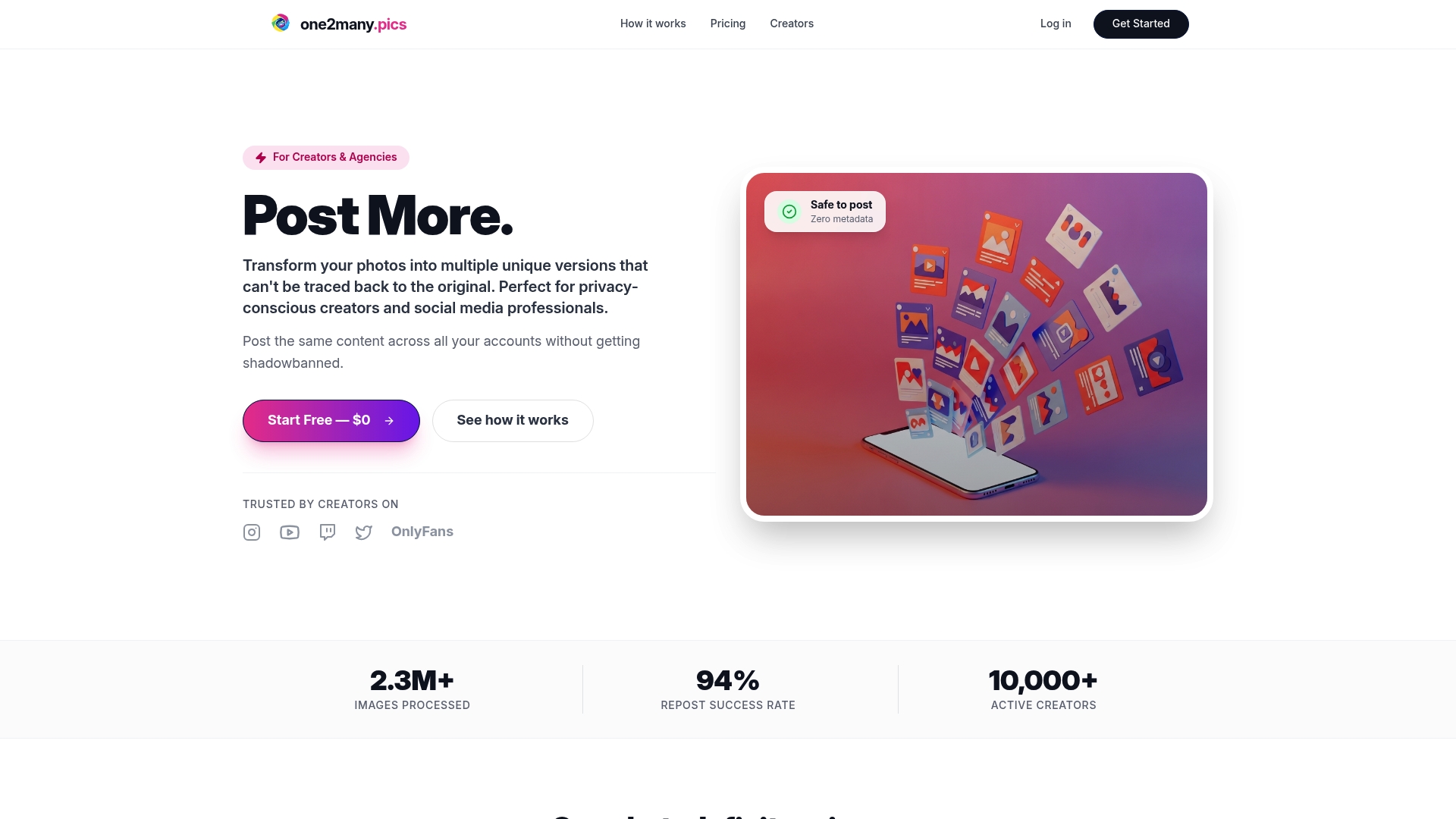
The platform strips location data, device info, and timestamps from images automatically, then generates unique visual variations for each post. That means you can scale your content across accounts without leaving a traceable metadata trail or triggering duplicate content filters. Plans range from single-image processing to bulk privacy workflows with automation and integration options for agencies and marketing teams. If protecting your visual content is part of your privacy-first content strategy, One2many is built for exactly that workflow.
FAQ
What is privacy-first content creation?
Privacy-first content creation is the practice of producing and distributing digital content with deliberate steps to protect creator and audience data, strip identifying metadata, and comply with standards like GDPR. It treats privacy as a default workflow requirement, not an afterthought.
How do I remove metadata from images before posting?
Use a tool like ExifTool or a platform like One2many to strip EXIF data, including GPS coordinates, device model, and timestamps, from images before publishing. This prevents platforms and third parties from tracing content back to your location or device.
What is zero-party data and why does it matter?
Zero-party data is information your audience shares with you directly and intentionally, such as quiz responses or preference center selections. It is the most privacy-friendly form of personalization because it requires no tracking and carries explicit consent.
How does link-leakage expose creator identity?
Link-leakage occurs when shared metadata, such as the same Google Analytics ID or recovery email, connects separate personal and professional accounts. Platforms and data brokers can map those connections even when the accounts appear publicly unrelated.
What is a staging environment in content publishing?
A staging environment is a private preview version of your content where you audit for tracking scripts, metadata leaks, and consent issues before the content goes live. Treating publishing like a software deployment catches privacy problems before they reach your audience.