

Content repurposing is defined as the practice of reshaping existing content into new formats tailored to different platforms, extending its reach and lifespan without starting from scratch. The industry term for this practice is "content atomization" when applied at scale, though "content repurposing" is the widely accepted standard term across marketing teams. 94% of marketers practice repurposing as a baseline efficiency strategy in 2026. That number signals a fundamental shift: repurposing is no longer a nice-to-have tactic. It is the operating system behind sustainable content production.
What is content repurposing and why does it matter?
Content repurposing is the process of taking one source asset and reformatting its core ideas into multiple platform-specific pieces. A single long-form blog post becomes a LinkedIn carousel, a Twitter thread, a short-form video script, and a newsletter section. The core insight stays the same. The packaging changes to match each platform's native format and audience expectations.
The efficiency gains are significant. Creators typically extract 10–30 assets from a single long-form source piece. That output means one well-researched article can fuel an entire month of cross-channel content without generating a single new idea from scratch.

Repurposing also extends the lifespan of your best work. A blog post published in january may reach 500 readers. That same post, atomized into a carousel in march and a short video in may, reaches entirely new audiences who never saw the original. The idea compounds over time instead of expiring after a single publish cycle.
How does content repurposing differ from distribution and recycling?
These three terms describe very different actions, and confusing them is one of the most common mistakes marketers make.
Content distribution means sharing an existing asset across channels without changing it. You publish a blog post, then share the URL on LinkedIn, Twitter, and in your newsletter. The content itself is unchanged. Distribution expands reach, but it does not adapt the content to each platform's format or audience behavior.
Content recycling means re-sharing the same content again at a later date. A tweet from six months ago gets posted again. A blog post gets reshared on social media with the same caption. Recycling can extend visibility, but it offers no new value and often underperforms with algorithms that favor fresh, native content.
Content repurposing is the only approach that involves genuine reshaping. Repurposing means reformatting content to fit platform-native formats, which drives higher engagement than simply sharing a link. A podcast episode does not become a LinkedIn post by copying the transcript. It becomes one by extracting the three sharpest insights, writing them as standalone paragraphs, and adding a hook that works for a scrolling feed.
The distinction matters because platform algorithms reward native content. A YouTube video embedded in a tweet performs worse than a native video uploaded directly to Twitter. Repurposing forces you to create that native version, which is why it outperforms distribution and recycling on engagement metrics.
What are the main types of content repurposing?
Three core methods cover the majority of repurposing work: transformation, atomization, and translation.
Transformation
Transformation means changing the format while keeping the core idea intact. A blog post becomes a podcast episode. A webinar recording becomes a YouTube video. A research report becomes an infographic. The depth and substance of the original carry over, but the delivery mechanism changes completely. This method works best for long-form source content with strong narrative structure.
Atomization
Atomization means breaking one large piece into smaller, standalone units. A 3,000-word guide yields a dozen individual tips, each strong enough to stand alone as a social post, a quote graphic, or a short video. Modern content strategy favors "one idea, many derivatives" over recreating content for each post. Atomization is the mechanical process that makes that strategy real.
Translation
Translation means adapting tone, depth, and structure for a different audience segment. A technical tutorial written for developers gets rewritten in plain language for a general business audience. The facts stay the same. The framing, vocabulary, and examples change to match the new reader. This method is especially useful for cross-platform posting where the same idea needs to land differently on Instagram versus LinkedIn.
Popular repurposed formats include:
- Short-form video clips pulled from long interviews or webinars
- LinkedIn carousels built from blog post subheadings
- Email newsletter sections drawn from article introductions
- Twitter or Threads posts atomized from key statistics or quotes
- Quote graphics designed for Instagram or Pinterest
- Podcast episodes narrated from written guides
Pro Tip: Build a "content idea bank" where you log every strong quote, statistic, and insight from your source content before you start creating derivatives. This prevents you from missing your best material when you are deep in production.
How to build a content repurposing workflow step by step
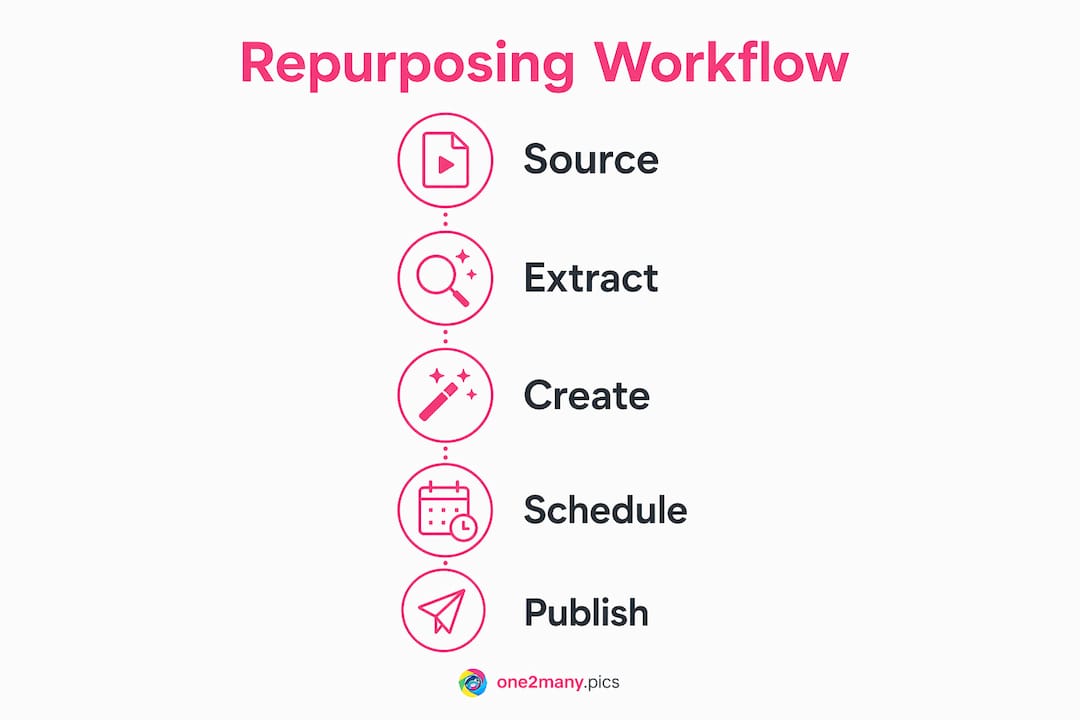
A documented, repeatable workflow is the difference between a sustainable repurposing system and a chaotic content treadmill. The four core stages are source identification, extraction mapping, asset creation, and scheduling.
1. Source identification. Not all content repurposes equally. Choose source pieces with enough substance to yield multiple angles. Long-form guides, research reports, webinar recordings, and in-depth interviews are the strongest candidates. A 400-word opinion post rarely has enough material to atomize effectively.
2. Extraction mapping. Build a master extraction document for each source piece. Break the content into atomic units: key statistics, strong quotes, step-by-step instructions, counterintuitive claims, and concrete examples. Expert practitioners use this document as the single reference point for all derivative creation, which prevents repeated re-reading of the source and speeds up production. Adapting hooks, structure, and pacing for each platform starts at this stage, not after you have already drafted the asset.
3. Asset creation. Use AI tools to generate first drafts from your extraction document. AI accelerates the initial pass significantly. However, AI drafts require human editorial review to inject brand voice, refine messaging nuances, and catch errors. Treat AI output as a rough draft, not a finished product. Build reusable templates for your most common formats, such as carousel layouts and newsletter structures, so production time drops with each cycle.
4. Scheduling. Spread your assets across a 2–3 week publishing window after the source piece goes live. Publishing all derivatives on launch day causes algorithm fatigue and audience overload. A staggered schedule prolongs visibility, keeps your feed active without new ideas, and improves engagement metrics across the board. Use a content calendar to map each asset to a specific date and platform before you start creating.
Pro Tip: Document your entire workflow in a shared team document, including templates, naming conventions, and scheduling rules. A system that lives only in your head does not scale and breaks down the moment a team member changes.
For a deeper look at building this kind of system, the bulk content posting guide from One2many covers the production side in detail.
Which tools best support a repurposing workflow?
The right tools reduce friction at every stage of the workflow without replacing the editorial judgment that makes repurposed content worth reading.
AI writing tools generate first drafts from extracted source material. They work best when given structured input from your extraction document rather than a raw transcript. The output quality depends entirely on the quality of your prompt and source material.
Scheduling and publishing platforms handle cross-channel distribution after assets are created. They allow you to queue content across platforms in advance, which is critical for maintaining a staggered publishing schedule without manual daily effort. Pairing scheduling tools with content marketing automation approaches can significantly reduce the time between asset creation and publication.
Visual template tools like Canva accelerate the creation of carousels, quote graphics, and infographic layouts. Locking brand colors, fonts, and layouts into reusable templates means designers or creators can produce visual assets in minutes rather than hours.
Editorial review is not a tool. It is a non-negotiable step. AI-generated drafts consistently lack the specific examples, brand personality, and tonal nuance that make content feel authentic. A human editor catches these gaps before publication.
A well-structured workflow also reduces the risk of duplicate content issues. Repurposed content in different formats avoids SEO duplicate content penalties when each asset is properly formatted for its platform and cross-linked back to the source. The content duplication overview from One2many explains the SEO mechanics in more detail.
What are the most common pitfalls in content repurposing?
Most repurposed content underperforms not because the strategy is wrong but because the execution skips critical steps.
Cloning without reshaping is the most frequent mistake. Copying a blog post into a LinkedIn post without rewriting the hook, shortening the structure, or adapting the tone produces content that feels out of place. Platform audiences recognize native content instantly, and they scroll past anything that feels imported.
The launch day dump kills reach. Posting ten derivatives of the same source piece on the same day signals low-quality behavior to algorithms and overwhelms your audience. Stagger assets across 2–3 weeks instead.
Skipping editorial review after AI drafts produces content that sounds generic. AI tools do not know your specific audience, your brand's tone, or the nuance behind your claims. Human review is the step that turns a draft into a publishable asset.
Choosing weak source content limits what you can extract. If the source piece lacks depth, statistics, or concrete examples, the derivatives will be thin. Prioritize repurposing your strongest, most substantive work.
Pro Tip: Before repurposing any piece, ask: "Does this source content have at least five distinct, standalone insights?" If the answer is no, the piece is not ready to atomize.
Key Takeaways
A documented repurposing workflow is the single most effective way to scale content output without scaling the time and effort required to produce it.
| Point | Details |
|---|---|
| Repurposing is reshaping, not sharing | Reformatting content to platform-native formats drives higher engagement than distributing links. |
| One source yields many assets | Creators extract 10–30 platform-specific pieces from a single long-form source. |
| Workflow prevents burnout | A four-stage workflow (identify, extract, create, schedule) keeps production consistent and manageable. |
| Stagger your publishing | Spread derivatives across 2–3 weeks to avoid algorithm fatigue and extend visibility. |
| AI assists, humans decide | Use AI for first drafts, but require human editorial review before any asset goes live. |
Why repurposing changed how I think about content creation
The shift from "one idea, one post" to "one idea, many derivatives" is not just a productivity upgrade. It is a fundamentally different relationship with your own content. At One2many, we have seen creators go from posting three times a week with constant stress to publishing daily across four platforms from the same source material, with less effort and better results.
The creators who struggle with repurposing almost always make the same mistake: they treat it as a mechanical copy-paste task. They take a blog post, strip out a paragraph, and call it a LinkedIn post. The content lands flat because the packaging was not designed for that platform's audience or format. Repurposing done right requires genuine editorial thinking at the extraction and adaptation stage.
The other thing most guides do not say clearly enough: repurposing protects your best ideas from disappearing. A great insight published once reaches a fraction of the audience it deserves. Atomized and scheduled across platforms over several weeks, that same insight compounds. The content workflow basics guide we put together reflects exactly this philosophy. Build the system first. The content follows naturally.
— one2many.pics
How One2many helps you scale your repurposing workflow
Repurposing is only as effective as the system behind it. One2many is built for creators and marketers who need to move content across platforms efficiently, without losing quality or consistency in the process.
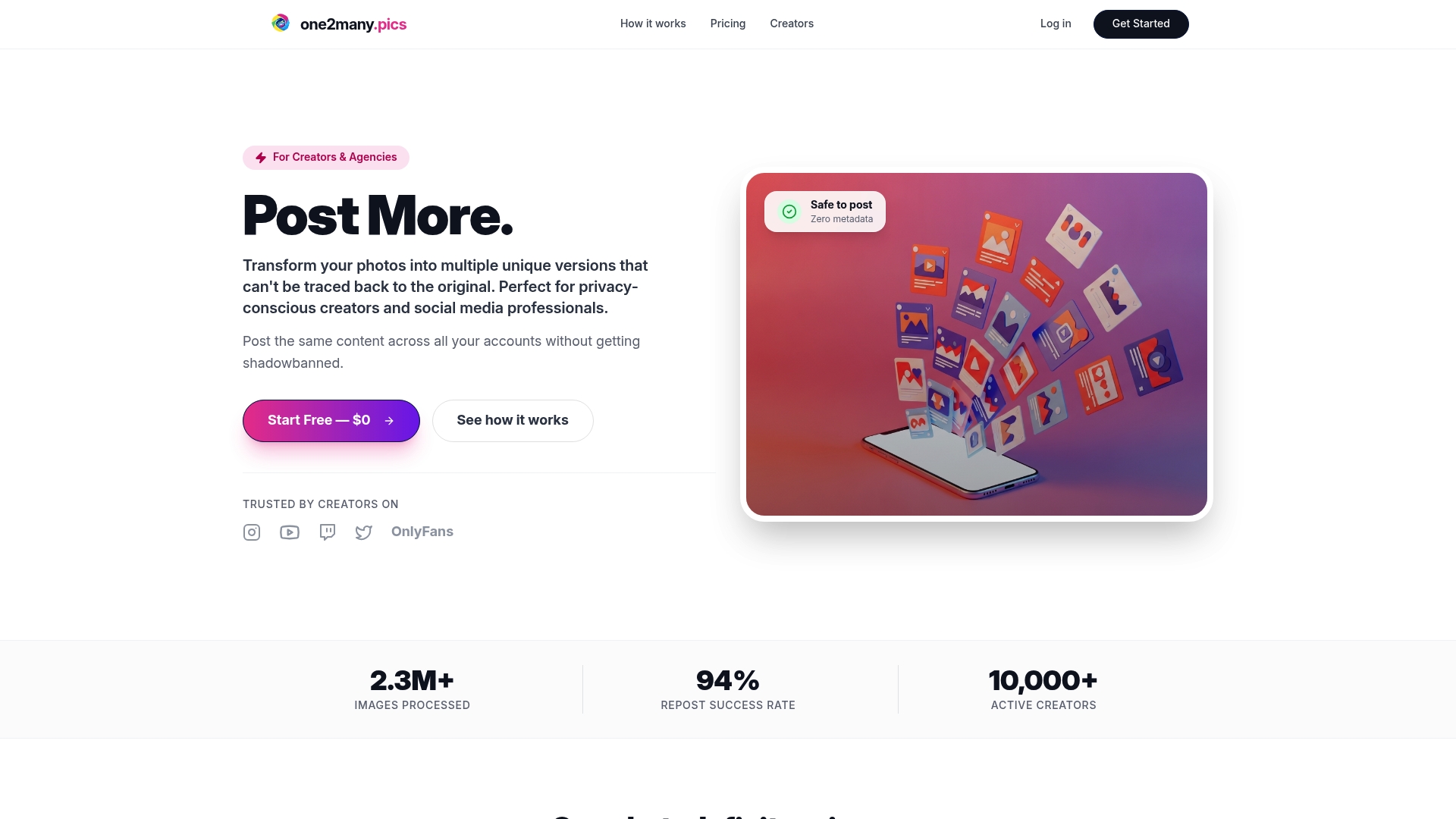
One2many's platform supports bulk content processing, visual asset variation, and scheduling workflows designed specifically for high-volume publishing. For creators managing multiple accounts or platforms, the ability to generate unique visual versions of the same asset and schedule them across a staggered calendar is a direct solution to the two biggest repurposing bottlenecks: duplicate detection and publishing logistics. Visit One2many to see how the platform fits into your content workflow and start publishing smarter across every channel.
FAQ
What is content repurposing in simple terms?
Content repurposing is the process of taking one existing piece of content and reformatting it into new versions for different platforms. The core idea stays the same; the format and packaging change to fit each channel.
Does repurposed content hurt SEO?
Repurposed content in different formats does not cause duplicate content SEO penalties when each asset is properly formatted for its platform and cross-linked back to the original source.
How many assets can you create from one piece of content?
Creators typically extract 10–30 platform-specific assets from a single long-form source piece, depending on the depth and length of the original content.
What is the biggest mistake in content repurposing?
The most common mistake is cloning content without reshaping it for the target platform. Copying a blog post directly into a social caption without rewriting the hook and structure produces content that underperforms on every metric.
How often should you repurpose the same content?
Spread repurposed derivatives across a 2–3 week window after the source piece publishes. Publishing all assets on the same day causes algorithm fatigue and reduces overall reach.