

Most marketers think of image editing as a visual task. Adjust the brightness, crop out the messy background, add your logo, done. But that framing misses something much bigger. The images you post carry invisible data, repeatable patterns, and identifiable fingerprints that platforms analyze within milliseconds of upload. Without deliberate modification, your content risks suppression, your audience data risks exposure, and your multi-account strategy risks collapse. This article walks you through why image modification is now a strategic marketing tool and how to use it without sacrificing authenticity or crossing ethical lines.
Table of Contents
- Why image modification matters in digital marketing
- How platforms detect and suppress unmodified content
- Privacy-first image modification techniques for marketers
- The trade-offs: Privacy, authenticity, and engagement
- A hard truth: Why image modification strategy needs to evolve now
- Take your next steps in privacy-savvy marketing
- Frequently asked questions
Key Takeaways
| Point | Details |
|---|---|
| Image modification is vital | Protecting privacy and avoiding platform suppression is now crucial for marketers and influencers. |
| AI tools boost efficiency | Automated anonymization helps marketers safeguard sensitive content at scale. |
| Balance authenticity and privacy | Effective image modification protects privacy without sacrificing engagement or trust. |
| Compliance beats evasion | Ethical, regulation-friendly strategies are more sustainable than trying to outsmart automated moderation. |
Why image modification matters in digital marketing
Privacy used to be a checkbox in a legal document. Now it's a competitive advantage. Audiences are more aware than ever of how their data is collected, and brands that visibly respect privacy earn trust faster. But privacy concerns don't stop at user data. They extend directly to the images you post.
Every unmodified photo carries embedded metadata, including the GPS location where it was taken, the device model used, the timestamp, and sometimes even the photographer's name. When you post that image, you're sharing all of it with the platform and potentially with anyone who downloads the file. For influencers managing multiple accounts or agencies handling brand content, that's a major exposure risk.
Content suppression is the other side of this coin. Platforms actively scan for images that appear identical or near-identical across multiple posts or accounts. When they detect a match, they either reduce the post's reach or remove it entirely. Reposting the same product photo across five accounts without any modification is a reliable way to trigger this response.
Image modification solves both problems simultaneously. Here's what effective modification looks like in practice:
- Cropping and reframing changes the pixel composition enough to defeat basic hash-matching systems
- Metadata stripping removes location, device, and timestamp data before upload
- Blurring and overlaying anonymizes faces, logos, or license plates in the background
- Color and contrast adjustments alter pixel-level fingerprints while keeping the visual intact
- Watermark repositioning creates unique versions of the same branded image
AI-powered image anonymization detects and blurs faces, license plates, and logos automatically, which is especially useful for influencer content shot in public spaces. You can also anonymize images as part of a broader strategy for safe sharing.
Treating image modification as purely cosmetic is the most expensive mistake a modern marketer can make. Privacy and reach are now inseparable from how you prepare your visuals before posting.
For teams protecting images across multiple platforms, these techniques aren't optional extras. They're foundational workflow steps.
How platforms detect and suppress unmodified content
Understanding detection is the first step to avoiding suppression. Major platforms don't rely on manual review to catch duplicate or policy-violating images. They use automated systems that operate at a scale no human team could match.
The primary tool is content fingerprinting, sometimes called perceptual hashing. The platform converts your image into a unique numeric signature based on its visual content. If you upload the same image twice, both signatures match and the system flags the duplicate. Even subtle changes like resizing or minor color shifts can sometimes generate a match if the underlying composition is identical.
Beyond fingerprinting, platforms use machine learning models to classify image content, detect faces, identify branded elements, and flag potentially sensitive or policy-violating material. Platforms rely on increasingly advanced automated moderation systems that update regularly, meaning yesterday's workaround may not work tomorrow.
Here's how three major platforms approach image moderation:
| Platform | Primary detection method | Key suppression trigger | What marketers feel |
|---|---|---|---|
| Hash-matching + AI content review | Duplicate images, policy violations | Reduced ad reach, post removal | |
| Perceptual hashing + engagement signals | Repeated visuals across accounts | Shadowban, lower organic reach | |
| TikTok | AI visual analysis + audio/visual sync | Reposted content, watermarked competitors | Video suppression, limited distribution |
The stakes are measurable. Instagram's internal suppression systems, as reported in platform transparency disclosures, affect millions of posts per quarter. For marketers running campaigns across multiple accounts, even a partial reduction in reach adds up to significant lost impressions and revenue.
Understanding social media fingerprints is essential for any creator or agency that wants to stay ahead of these systems. Because platform detection is so sophisticated, marketers must choose their modification techniques carefully, which brings us to actionable methods to protect privacy and maximize reach.
Privacy-first image modification techniques for marketers
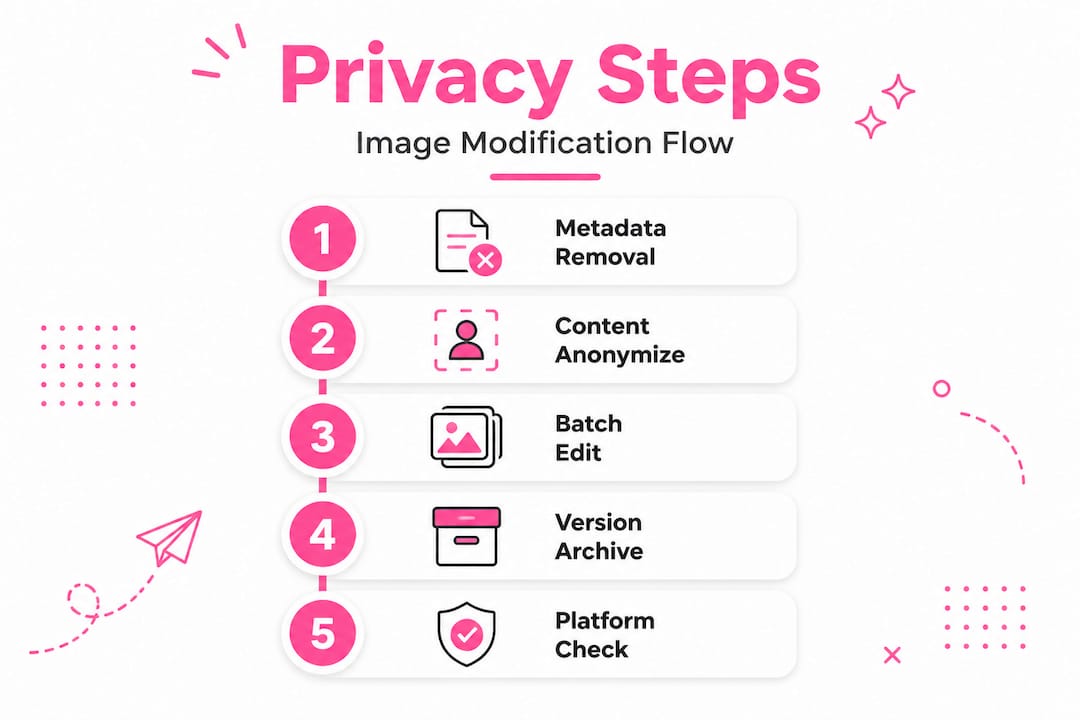
The goal here isn't to trick platforms. It's to create genuinely unique, privacy-respecting images that serve your audience and your brand. Here's a practical, step-by-step workflow used by professional content teams:
-
Start with your original image and audit its metadata. Use a free tool like ExifTool or check your editing software's export settings. Strip GPS coordinates, device model, and timestamp before doing anything else.
-
Crop or reframe the composition. Even a 5 to 10 percent crop changes the pixel hash significantly. Reframe to give the image a different focal point when possible, which also refreshes the visual for different audience segments.
-
Apply anonymization where needed. If your image contains people in the background, license plates on vehicles, or competitor logos, blur them using an AI-powered tool that detects and blurs identifying information automatically. Manual blurring is fine for one image but doesn't scale.
-
Add overlays, text, or branded elements. This changes the pixel composition while reinforcing brand identity. Even a subtle color wash or a repositioned watermark creates a meaningfully different image file.
-
Adjust color, contrast, or saturation slightly. Small visual adjustments that your audience won't consciously notice are enough to generate a distinct fingerprint.
-
Export with consistent quality settings and store both the original and modified versions in clearly labeled folders.
Batch processing matters enormously for agencies and professional managers. If you're handling content for ten clients or managing twenty accounts, modifying images one at a time is unsustainable. AI-powered batch tools can apply steps 1 through 5 to hundreds of images in minutes, letting your team focus on strategy instead of manual editing.
Pro Tip: Keep a dedicated archive folder for both the original and every modified version of each image. When a compliance audit happens, and they do happen, you'll need proof of what was posted where, when, and why specific modifications were made.
For teams looking to protect creative work at scale, batch workflows paired with AI anonymization are the most practical path forward. You can also find detailed guidance on how to create unique images safely for use across platforms. With core techniques in mind, it's important to weigh the true impact of modifying images, especially when balancing brand consistency, authenticity, and audience trust.
The trade-offs: Privacy, authenticity, and engagement
Image modification is powerful, but it comes with real trade-offs you need to understand before you build it into your workflow.
Authenticity is one of the strongest drivers of audience engagement on social media. Audiences gravitate toward content that feels real, specific, and human. Over-modification can strip those qualities out. Heavy blurring that removes recognizable context makes images feel generic. Aggressive cropping that cuts out environmental details reduces relatability. The result is content that feels polished but hollow.
Common mistakes marketers make when modifying images:
- Over-blurring faces, including those of the creator themselves, which removes personality from the content
- Stripping too much context, like removing location indicators that your audience actually cares about
- Inconsistent visual treatment across posts, making your feed look disjointed and reducing brand recognition
- Modifying images so heavily that they no longer reflect the product or experience being marketed
Here's a quick reference for weighing your modification choices:
| Technique | Privacy benefit | Risk to authenticity | Engagement impact |
|---|---|---|---|
| Anonymization | High | Low to medium | Neutral to positive |
| Stylization | Medium | Medium | Varies by audience |
| Cropping | Medium | Low | Typically neutral |
| Watermarking | Low | Low | Slightly positive |
| Metadata removal | High | None | None |
Ethical use of image modification prioritizes compliance over circumvention. This is worth stating plainly because the temptation to use modification purely as a platform-evasion tactic is real. But platforms evolve their detection constantly, and strategies built purely around evasion have a short shelf life. The durable approach is to modify images for genuine privacy and quality reasons, then let your content perform on its merits.
Different content types for privacy carry different risk profiles, and understanding those differences shapes smarter modification decisions. Research consistently shows that unique images outperform reposts in engagement metrics while also protecting privacy. When you're preparing content for distribution, thinking through cross-platform posting strategy alongside your modification workflow prevents both suppression and brand inconsistency.
Pro Tip: Run A/B tests on image variations before rolling them out across all accounts. Test two versions of the same image with different modification levels, then compare engagement rates. The results will tell you exactly how much modification your specific audience tolerates before authenticity drops off.
A hard truth: Why image modification strategy needs to evolve now
Here's the perspective most marketing guides won't share: the relationship between marketers and platform moderation systems is an arms race, and marketers who treat it purely as a technical problem will keep losing ground.
Every time a new modification technique becomes widely used, platforms update their detection models to account for it. Hash-matching evolved to perceptual hashing. Perceptual hashing evolved to AI visual classification. What works today as a fingerprint-defeating crop will be detectable in six months. This is not speculation. Automated moderation reliance is increasing across every major platform, with investment in AI detection growing year over year.
The marketers who are actually winning are not the ones with the cleverest evasion techniques. They're the ones who have invested in building genuinely distinct visual identities that don't need to evade detection because they have nothing to hide. When your images are truly unique because they reflect an authentic brand perspective, original photography, and thoughtful privacy practices, platform algorithms have nothing to flag.
This means the real strategic shift is to integrate privacy thinking at the content creation stage, not just at the posting stage. Shoot original images with privacy in mind. Build modification steps into your content calendar workflow. Stop treating image preparation as a technical afterthought.
The guide to scaling image strategies shows how this looks in practice for teams managing high-volume content. The conclusion is consistent: privacy-first, platform-friendly image preparation beats reactive modification every time. Building a sustainable strategy means accepting that the rules will keep changing and designing your workflow to adapt, not to win a single battle.
Take your next steps in privacy-savvy marketing
Ready to put privacy-first image modification into your marketing workflow? The techniques in this article work, but applying them manually across dozens of images and multiple accounts quickly becomes a bottleneck.
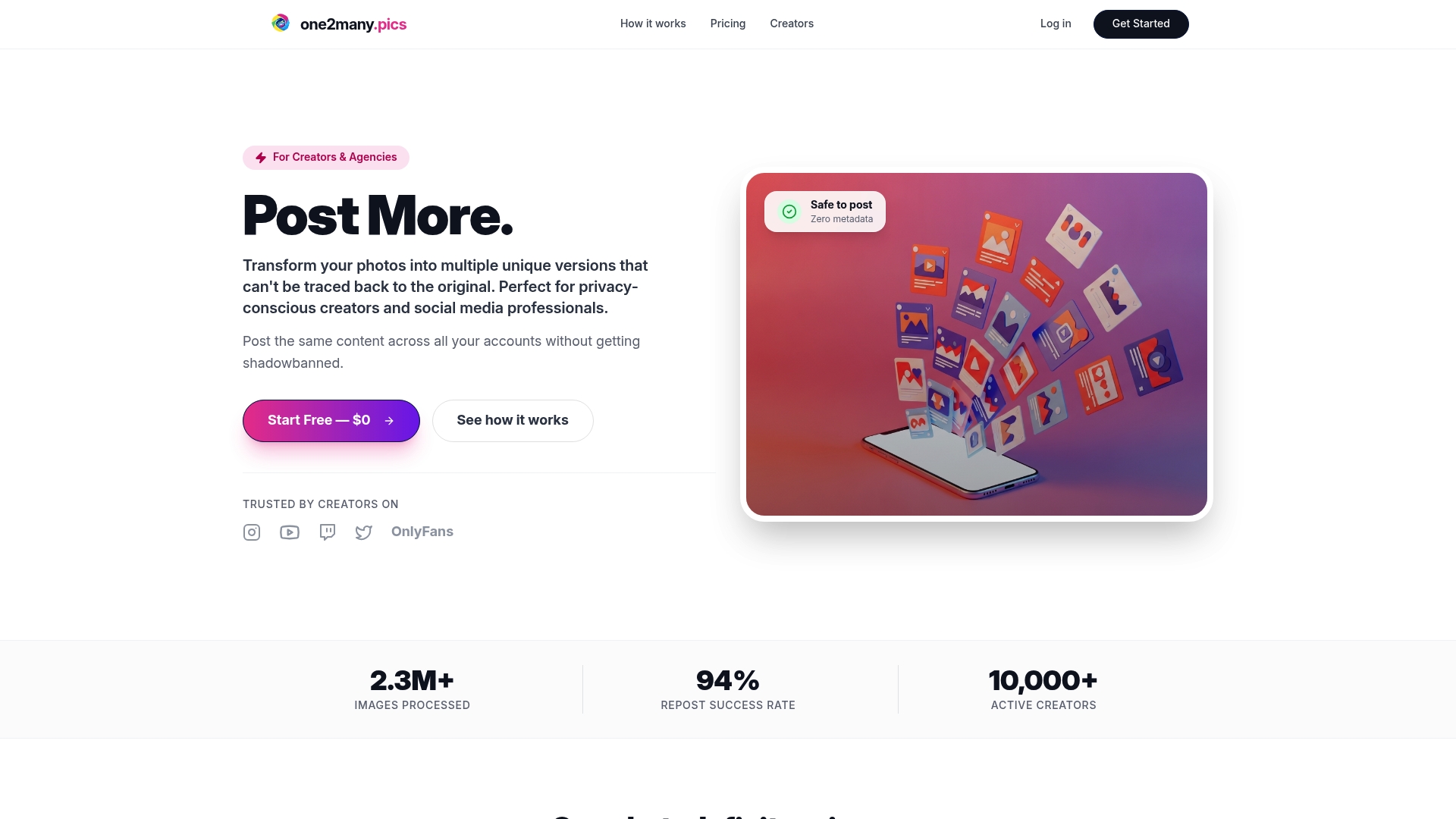
One2Many.pics is built specifically for creators, managers, and agencies who need to modify, anonymize, and diversify images at scale without sacrificing quality or brand consistency. The platform removes metadata, generates unique visual variations, and helps you manage content across multiple accounts with a straightforward upload-and-download workflow. Whether you're handling one account or fifty, the subscription plans are designed to match your volume and your privacy needs. Start protecting your reach and your audience's privacy in the same step.
Frequently asked questions
How does image modification help avoid content suppression?
By altering images through cropping, color adjustments, or metadata removal, marketers create unique files that automated moderation systems do not recognize as duplicates, reducing the risk of suppression.
What is AI-powered image anonymization and why should marketers use it?
AI image anonymization automatically detects and blurs faces, license plates, and logos in images, making it fast and reliable for marketers who need privacy compliance without manual editing.
Can modifying images harm authenticity or engagement?
Yes. Over-modification, such as heavy blurring or removing contextual details, can make images feel generic and reduce the audience connection that drives engagement.
Are there ethical risks in modifying images for marketing?
Marketers should use modification to protect privacy and meet platform guidelines, not to mislead algorithms. Ethical use focuses on compliance, not circumvention.
What should marketers keep in mind when modifying images for multiple accounts?
Maintain consistent brand visuals across accounts, test variations for engagement performance on each platform, and archive both original and modified files for compliance and auditing purposes.